Case study · CNN Original · Austin, Texas
LBJ: Triumph and Tragedy.
A CNN Original documentary miniseries produced by Bat Bridge Entertainment. Its reenactments were built and shot on stage at Troublemaker Studios in Austin, where I headed the art department as production designer — nine-plus period environments in six weeks, on an eight-person crew, with the hero props built by hand.
| Mark | Issue | Description |
|---|---|---|
| Research | Primary reference gathered along with my own photographs and measurements at the LBJ Presidential Library and the LBJ Ranch. | |
| Prep | Four weeks. | |
| Fabrication | Props built in-house — CNC, UV flatbed, laser, 3D print. Fuselage panels sourced from Arkansas and driven to Austin. | |
| Build | Stage sets erected at Troublemaker Studios. | |
| Shoot | Two weeks. Construction leapfrogged the location days between studio setups. | |
| Wrapped | Spring 2021. Nine-plus environments delivered for the CNN Original. |
Brief
A-206 · 1.0The series tells its story three ways: through archival footage, filmed interviews, and reenactments. My department built the reenactments: the rooms where actors replay the history the footage narrates.
Nine-plus period environments. Four weeks to prep, two to shoot.
The largest were stage builds — the Oval Office, Air Force One, a commercial jet, and a single bedroom that played both a Washington hotel room and the Lincoln Bedroom, restaged between scenes. Smaller settings — an FBI office, a Memphis hotel room, an airport terminal — were shot on location and redressed with period furniture.
I headed the art department as production designer, and also acted as the prop fabricator.
- Oval Officestage build · sect. 2.0
- Air Force Onecabin + office · sect. 3.0
- Commercial jetstage build
- Doubling bedroomhotel ↔ Lincoln Bedroom
- Location daysredressed on location
The Oval Office
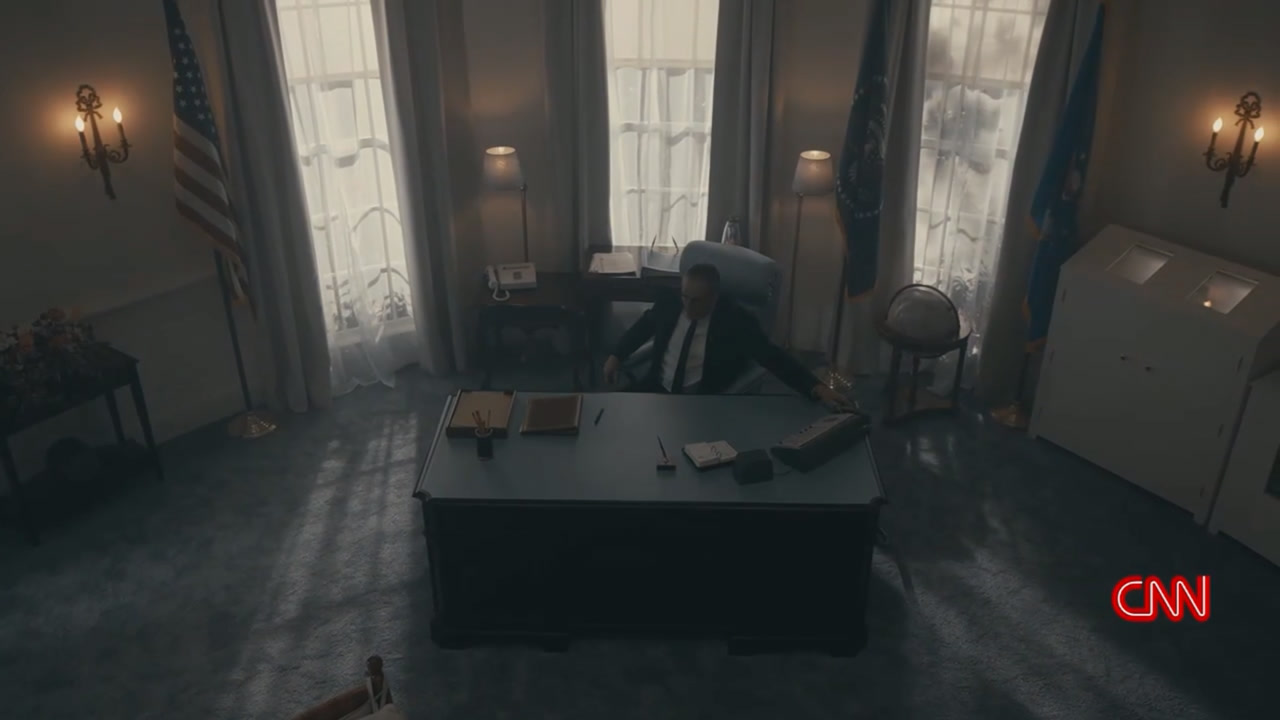
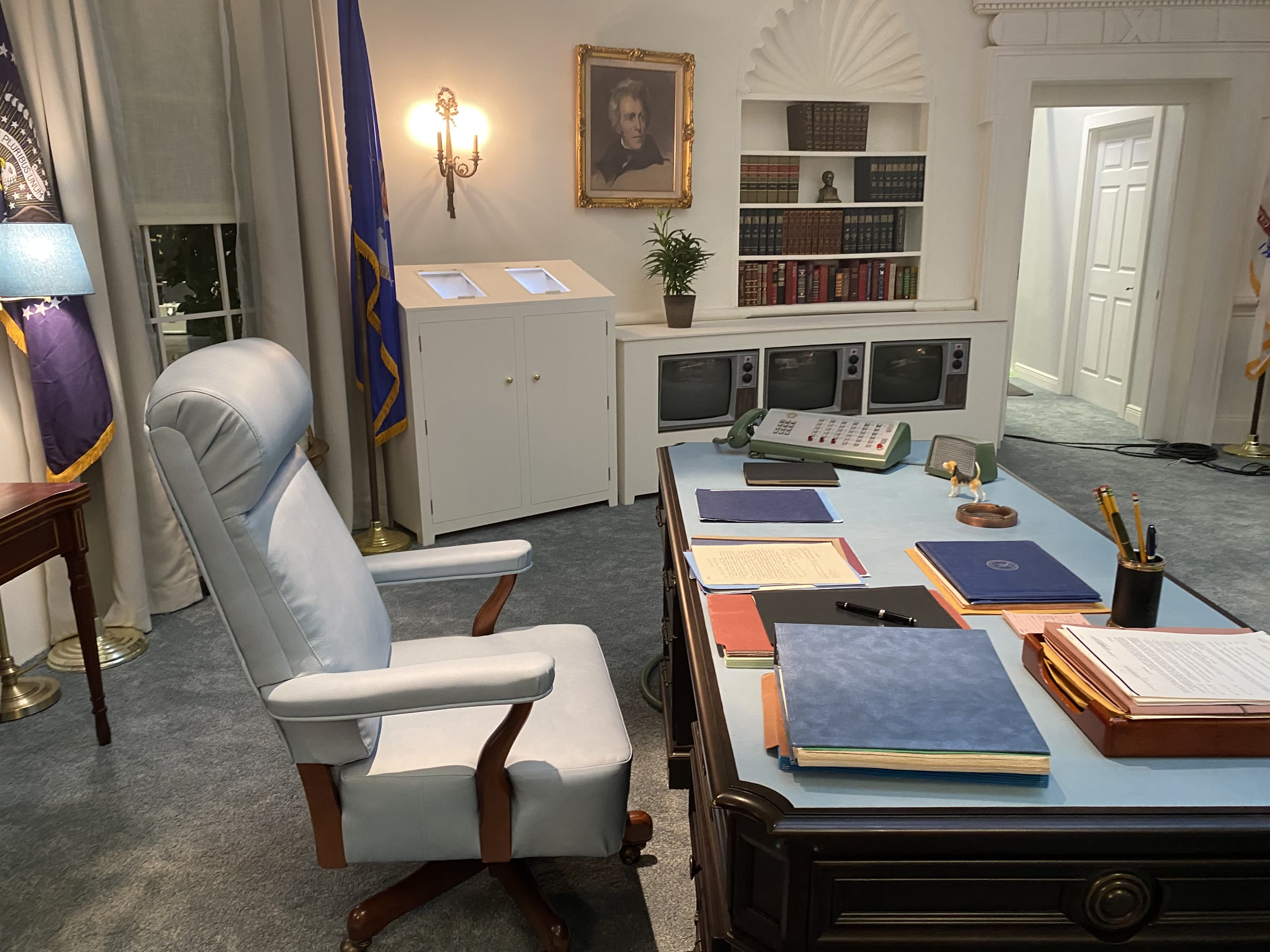
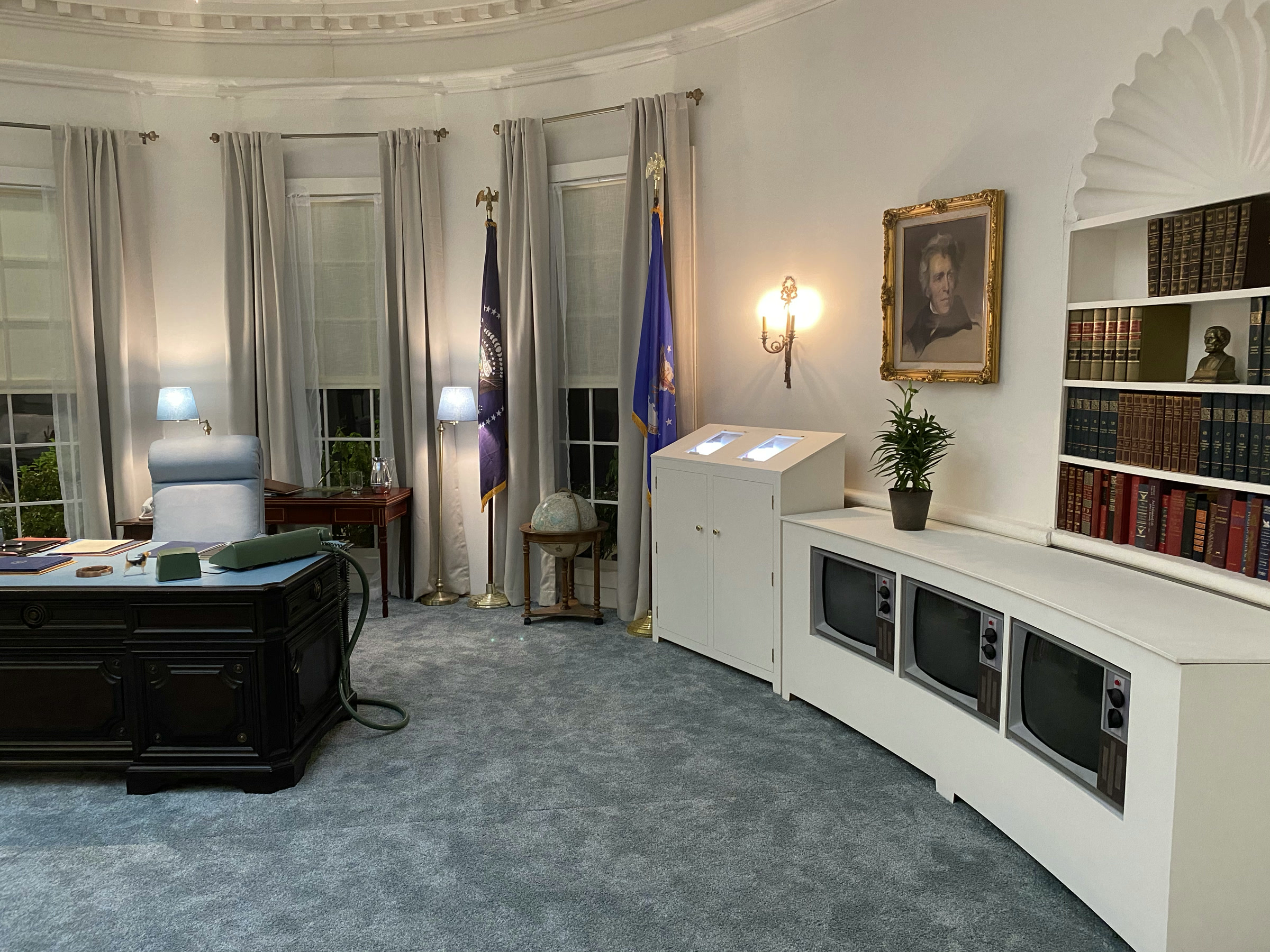
A-206 · 2.0The way the series was shot gave us a lot of freedom in some places, and required faithful recreation in others. Many shots were filmed very wide, or with the background in soft focus — we didn’t need every bust or lampshade or table matched to an archive photograph.
But certain items were important to telling the story. Those needed closeups and inserts, and they needed to be as precise as possible.
A lot of the big moves in the backgrounds could carry period character in soft focus. However, a lot of details like the phone and office tech needed special attention.
2.1Latitude. Wide frames and soft-focus backgrounds let the dressing read as period character — busts, lampshades, and shelves matched to the era, not to a single photograph.
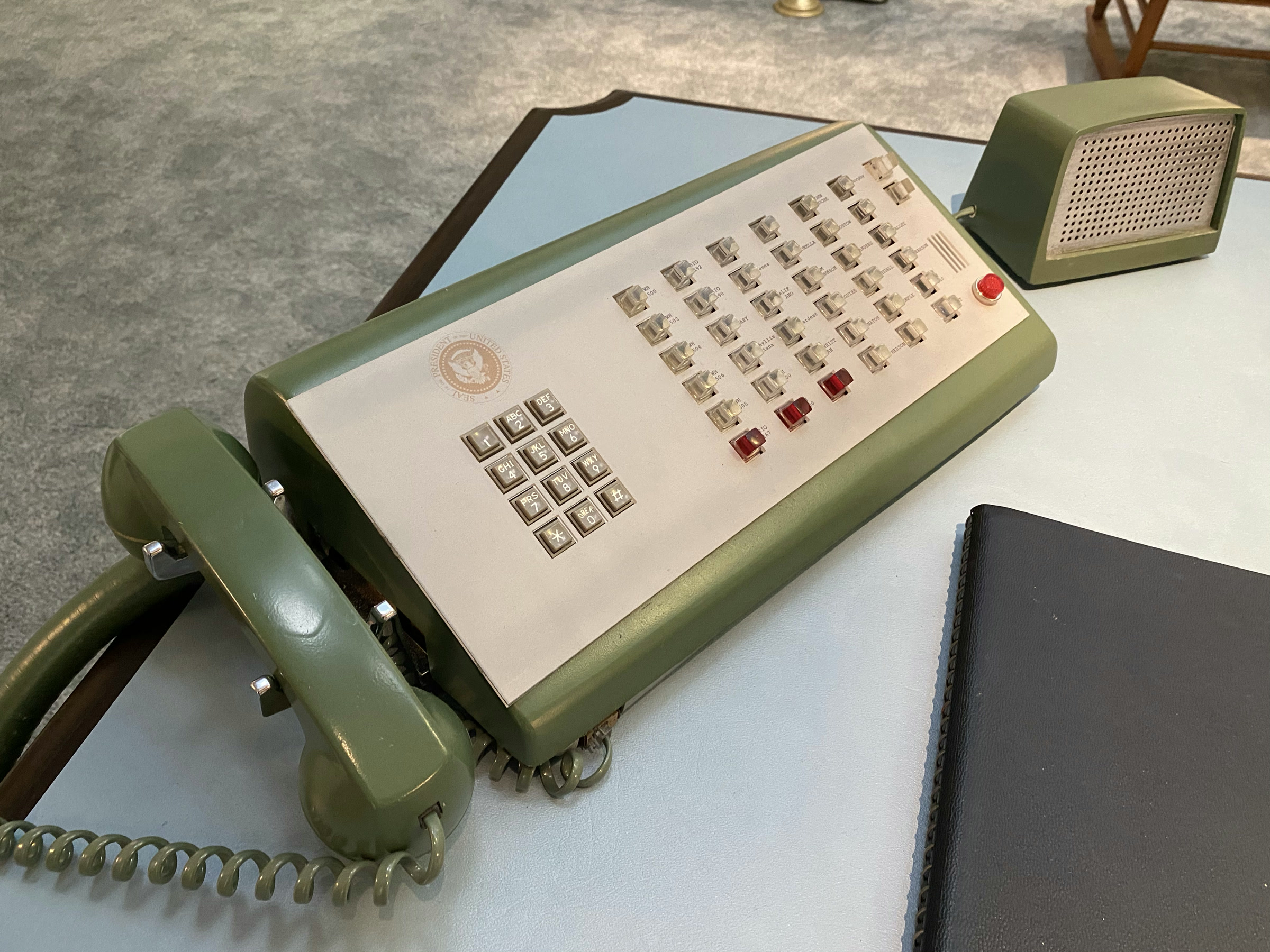
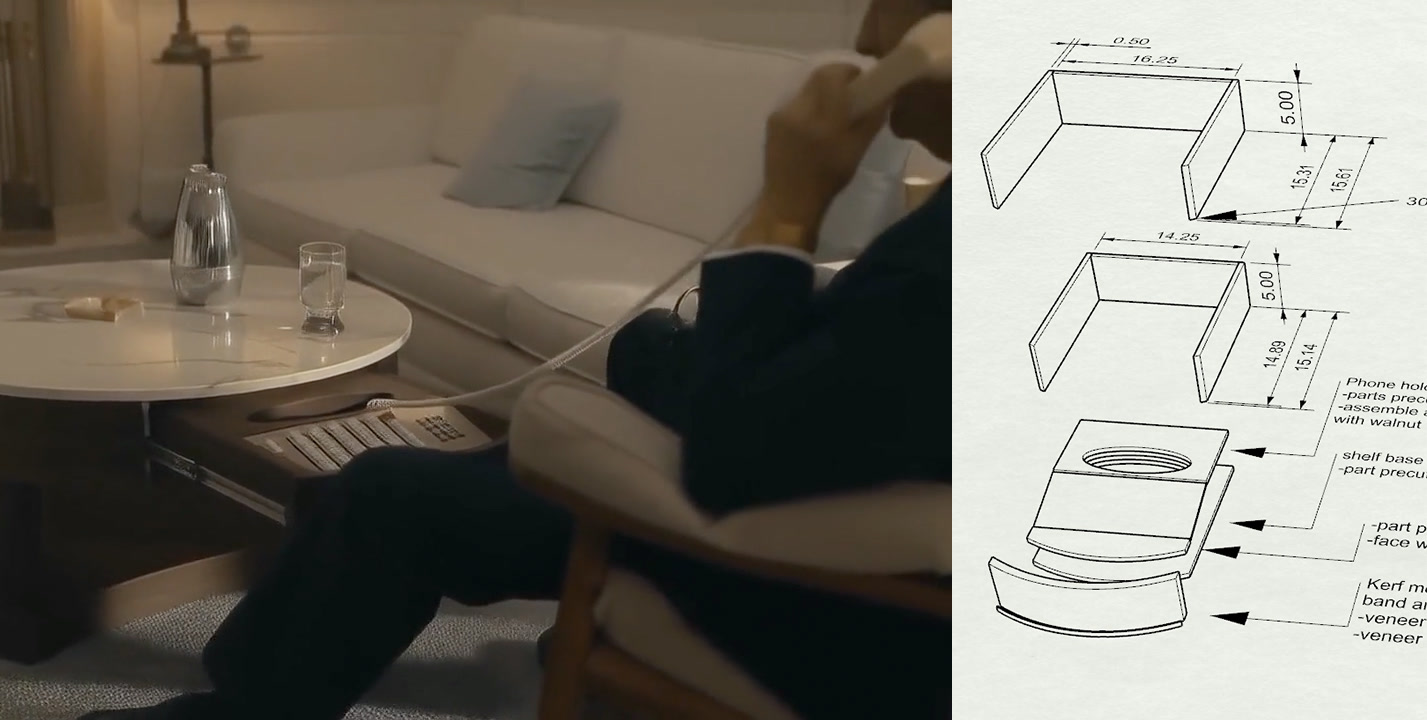
2.2Precision. Anything filmed in closeup or insert was matched to the archive as tightly as it could be built, down to the button layout on the switchboard phone.
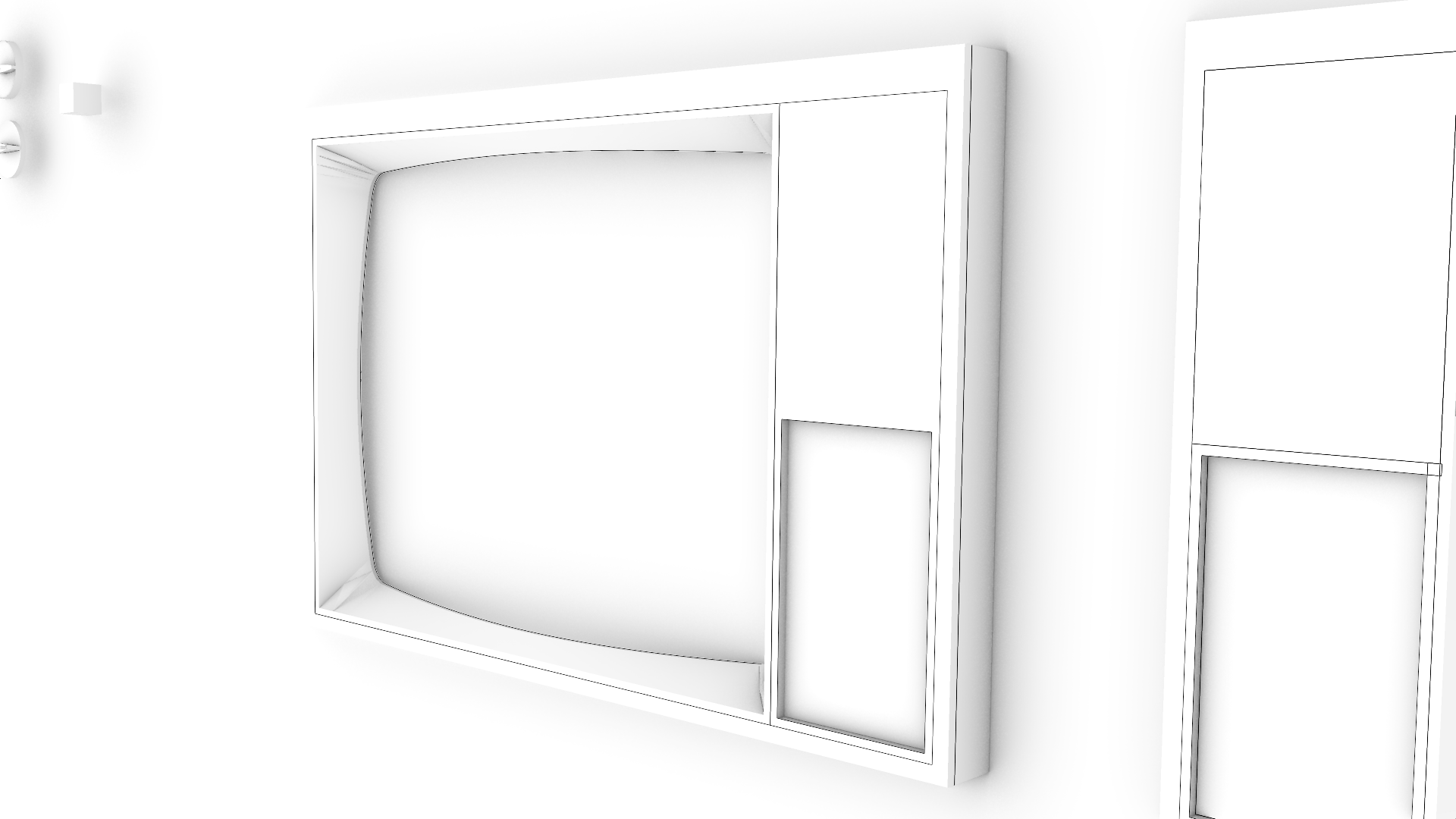
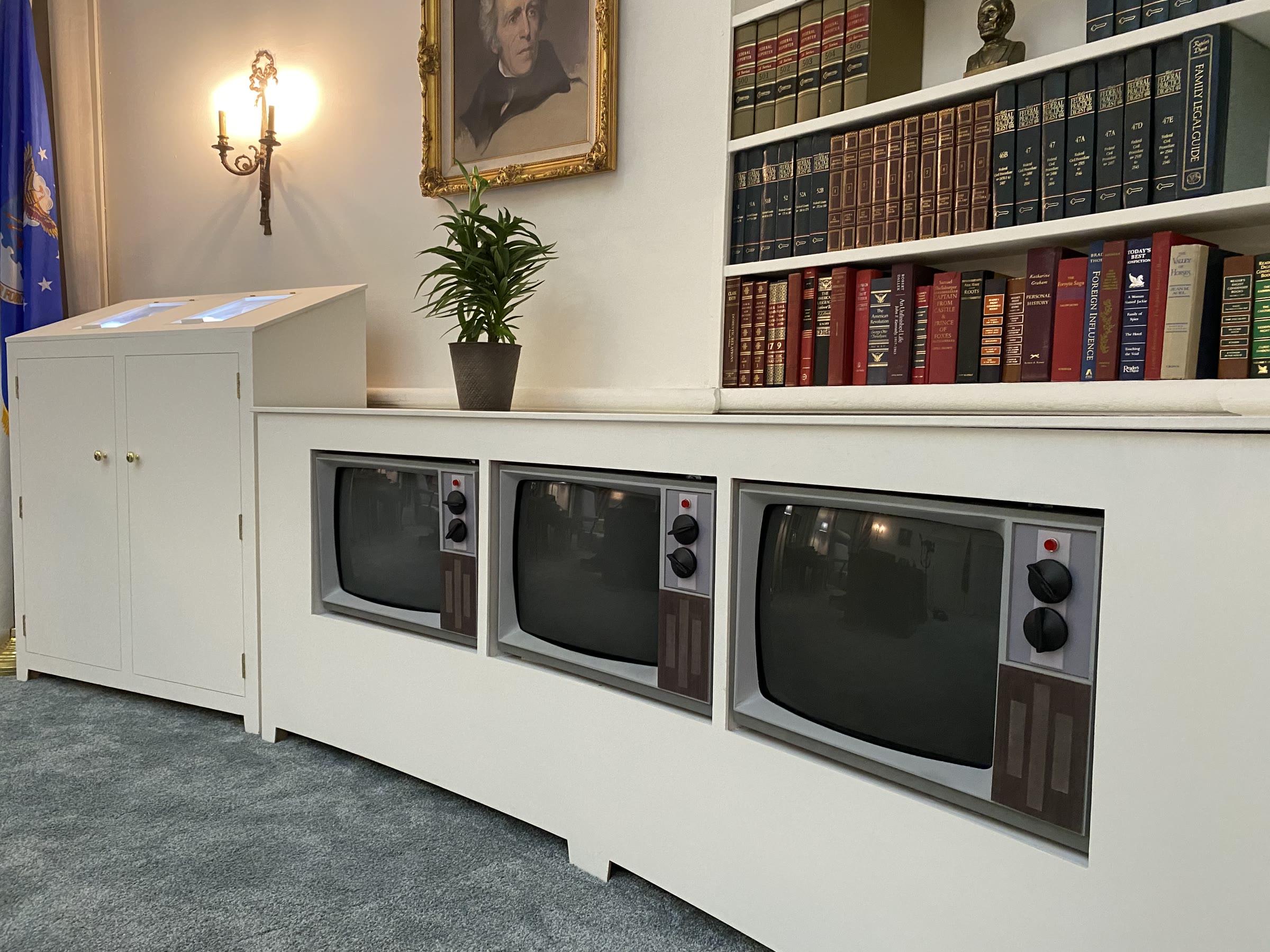
2.3The tech program. Johnson’s phone, televisions, and teletype were all custom builds.
The builds themselves — drawings, bench, and set — run in sect. 4.0.
Production conditions
Constraints that shaped the whole build.
N1 · CrewThe project spun up just after the shutdown. A larger crew would have triggered insurer-mandated protocol changes beyond the budget, so the department stayed small: eight people, with the production designer doubling as prop fabricator.
N2 · ScheduleTwo weeks of shooting ran against ongoing construction. Shoot in studio a day or two, move to a location while the next stage set went up, then come back, a leapfrog that turned location days into build windows.
N3 · SourcingPeriod-correct hardware is scarce. Three matching CRT televisions couldn’t be rented; airliner sidewall panels wouldn’t ship. Both were solved by hand, salvaged, rebuilt, or driven home.
Air Force One
A-206 · 3.0The flying office.
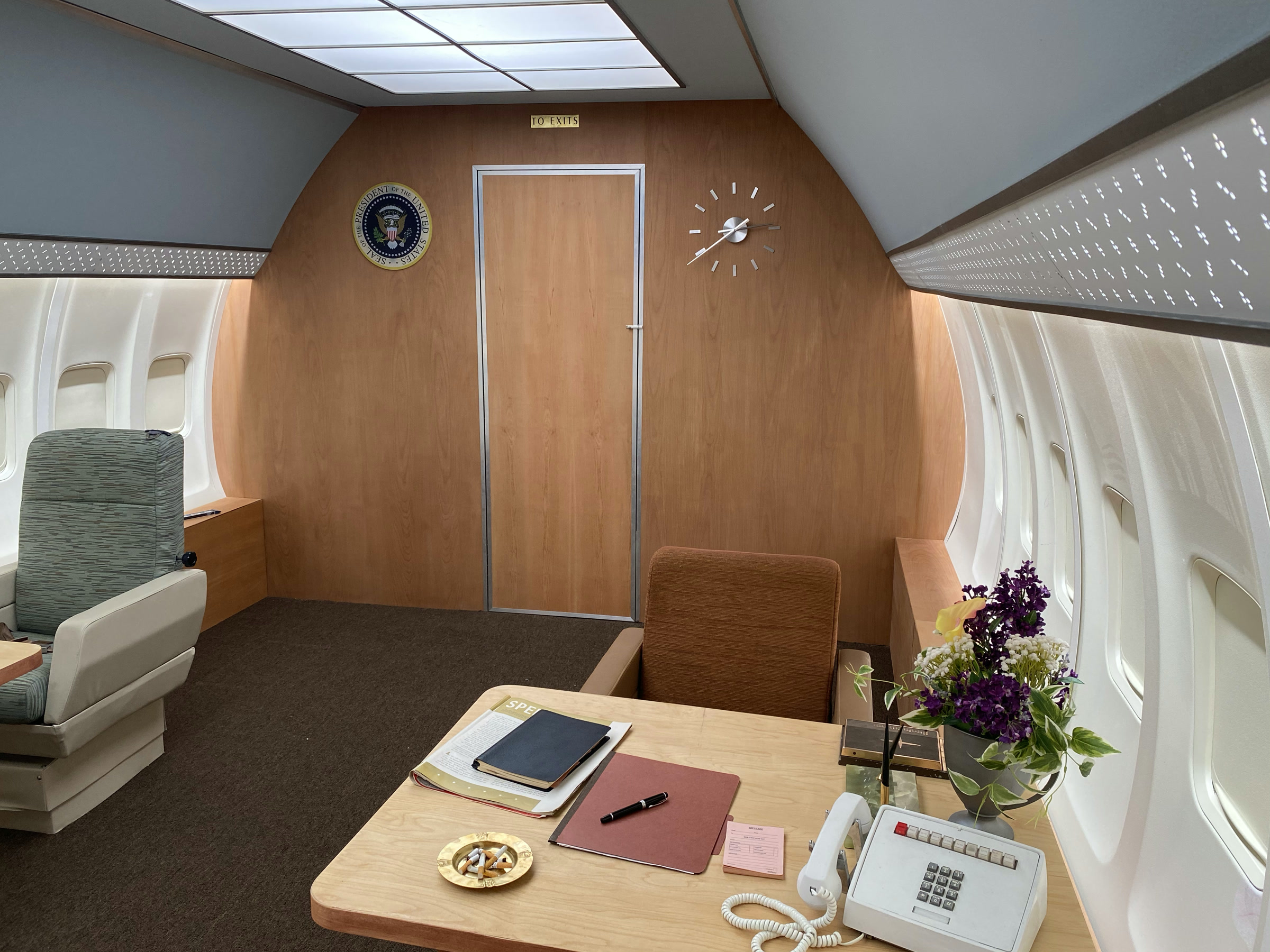
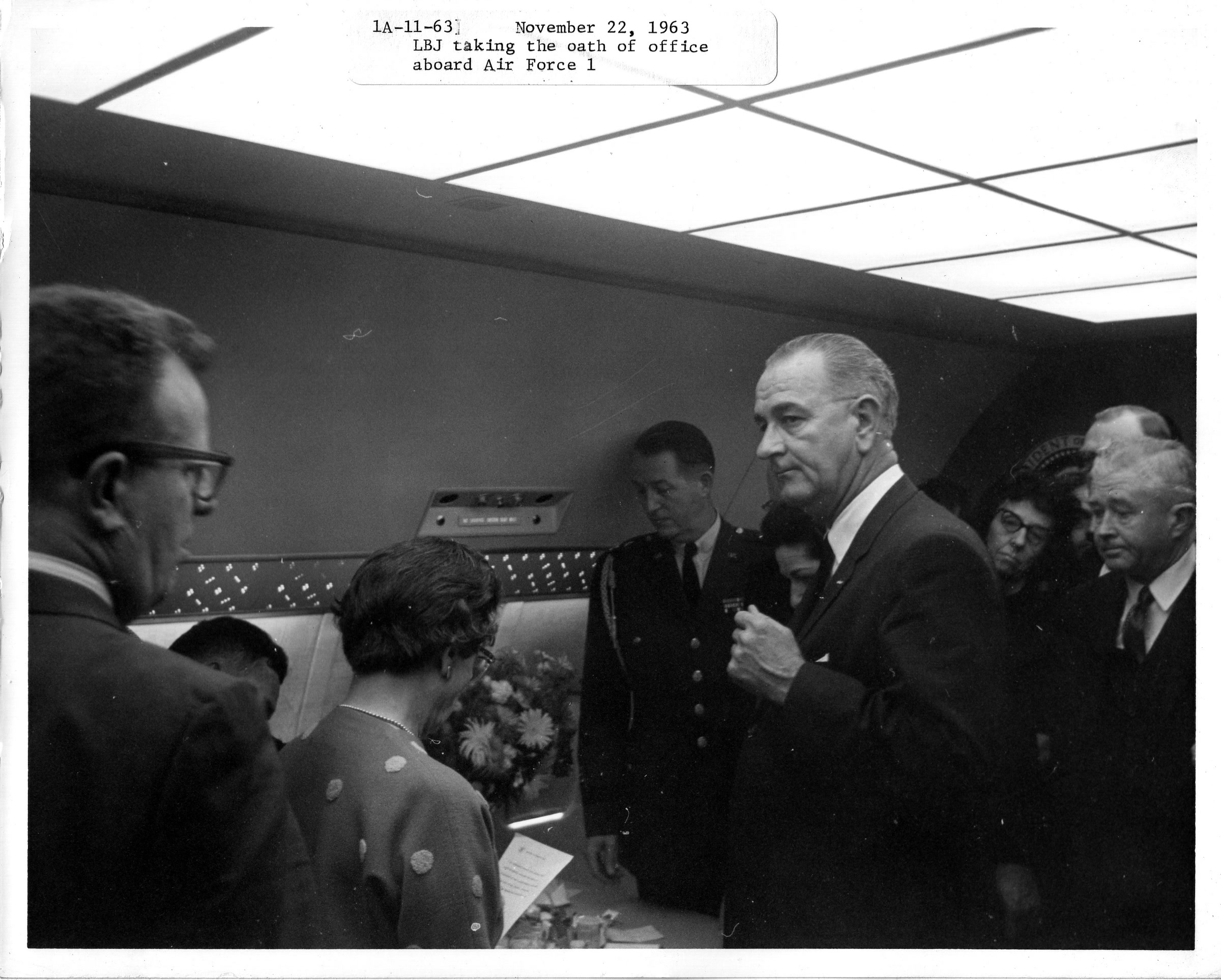
Several scenes across the presidency play aboard the plane, the swearing-in among them. The set had to work as a fuselage, a cabin, and a flying office.
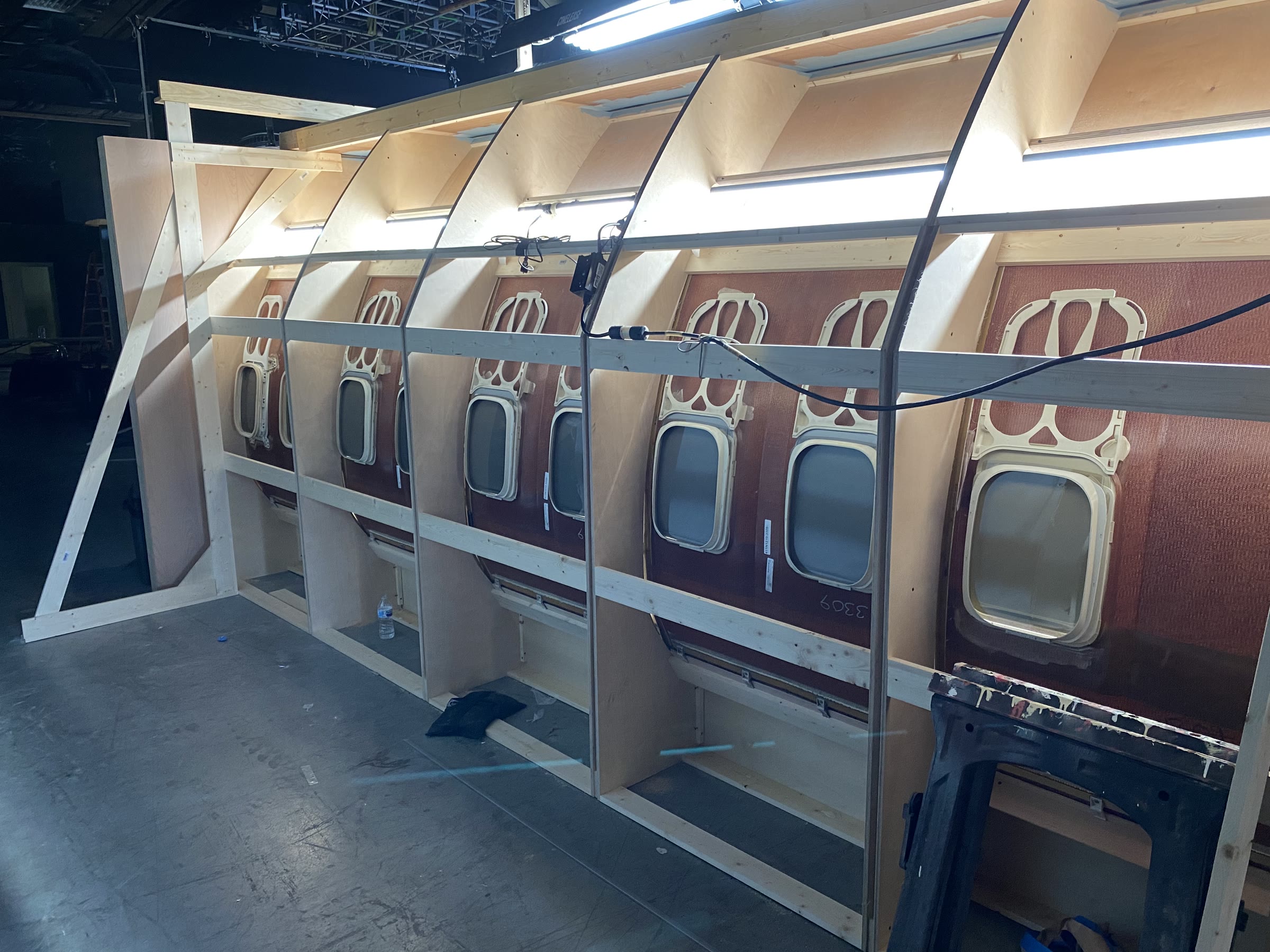
I found the panels at an Arkansas firm that does interior retrofits for Delta. They were outdated stock, and the company was willing to sell — but not to ship. I flew out the next day, rented a Penske van, and drove them back to Austin.
The polar-projection world map on the aft bulkhead was rebuilt from period photographs and printed on my own UV flatbed. The cabin furniture came on loan from a museum’s Air Force One replica.
Detail D1 — from the outside looking in
From the front it reads as an airliner. From behind it is exactly that: real, outdated Delta sidewall panels on stud framing, with worklights rigged outside to daylight the portholes through the glass.
Cross-reference: the finished wall from inside — Fig. 3-A.
Fabrication
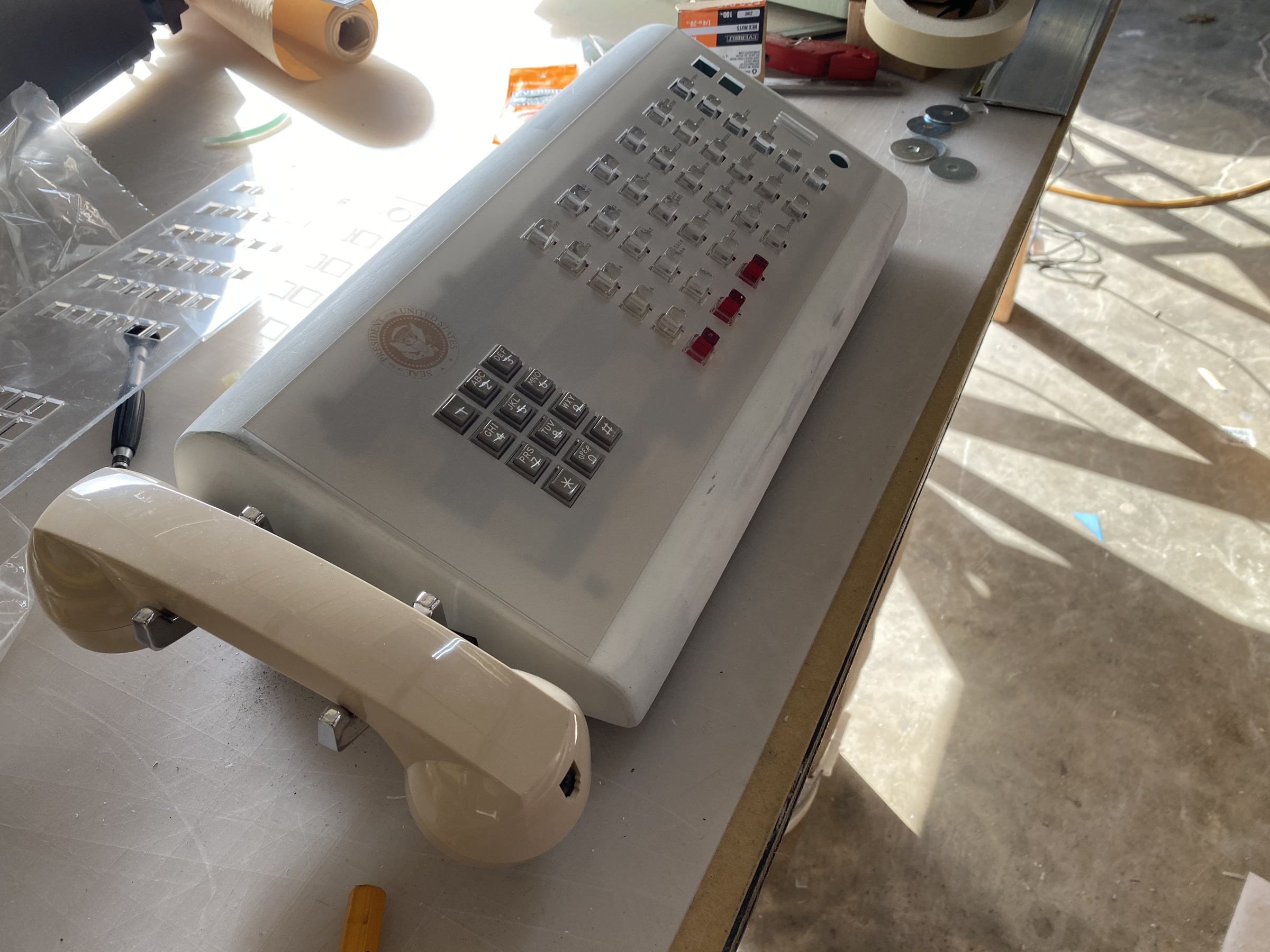
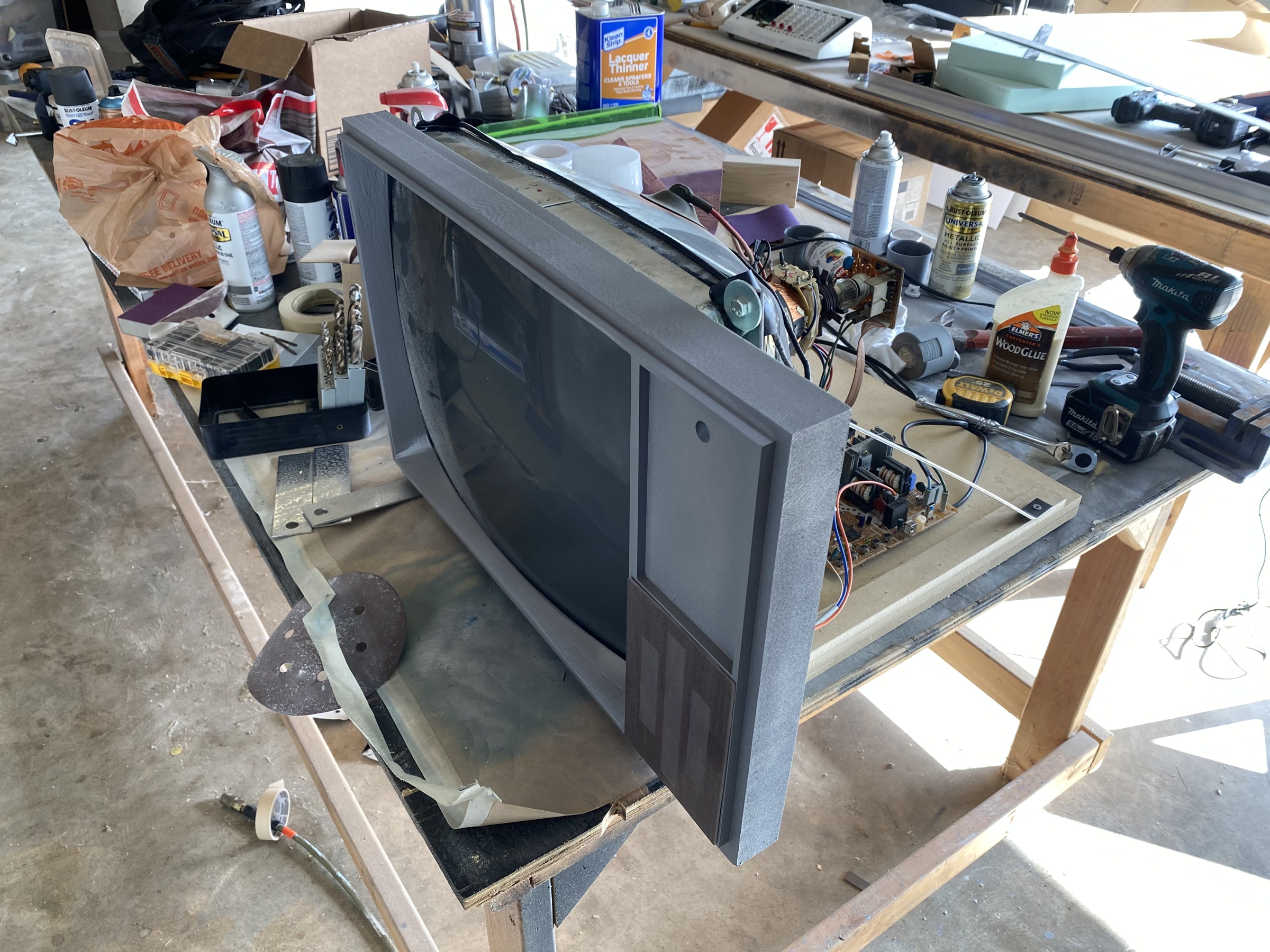
A-206 · 4.0Lyndon Johnson was the first president to really embrace technology, and his Oval Office reflected it. He commissioned a custom switchboard telephone from Western Electric, a custom-built coffee table with hidden communications inside, a bank of televisions, and a teletype with a live newswire feed.
In the Oval, every one of those was a build recreated from primary research: photographs and measurements I took on site at the LBJ Presidential Library and the LBJ Ranch, worked up into models and drawings before anything was cut.
Props built in-house — CNC, UV flatbed, laser, 3D print. The teletype: an antique typewriter rigged to run by remote, faking a live ticker on camera.
Credits
A-206 · 5.0The reenactments are cut against real footage of the rooms they recreate, so the design had to be right down to the button layout on a telephone. That accuracy started as primary research — measured and photographed on site — and was carried through drawing and into fabrication by one small department.
The location environments — an FBI office, a Memphis hotel room, an airport terminal, an East Wing bedroom — were shot on location and redressed with period furniture. This sheet covers the stage builds.
- Stephen FayProduction designerHeaded the art department. Set design across the stage builds; fabricated the hero props — the switchboard phone, the television bank, the teletype, the coffee table.
- Art departmentEight, including meAn art director, a set decorator, a set dresser, a prop master, and three carpenters — the COVID-sized crew.
- Bat Bridge EntertainmentProducerLBJ: Triumph and Tragedy — a CNN Original miniseries.
- Troublemaker StudiosStageAustin, Texas — set build and shoot.
Nine period environments, six weeks, a crew of eight, built to hold up beside the footage they recreate.