Case study · Rooster Teeth · Haunter, Season 2
Kennedy Mines.
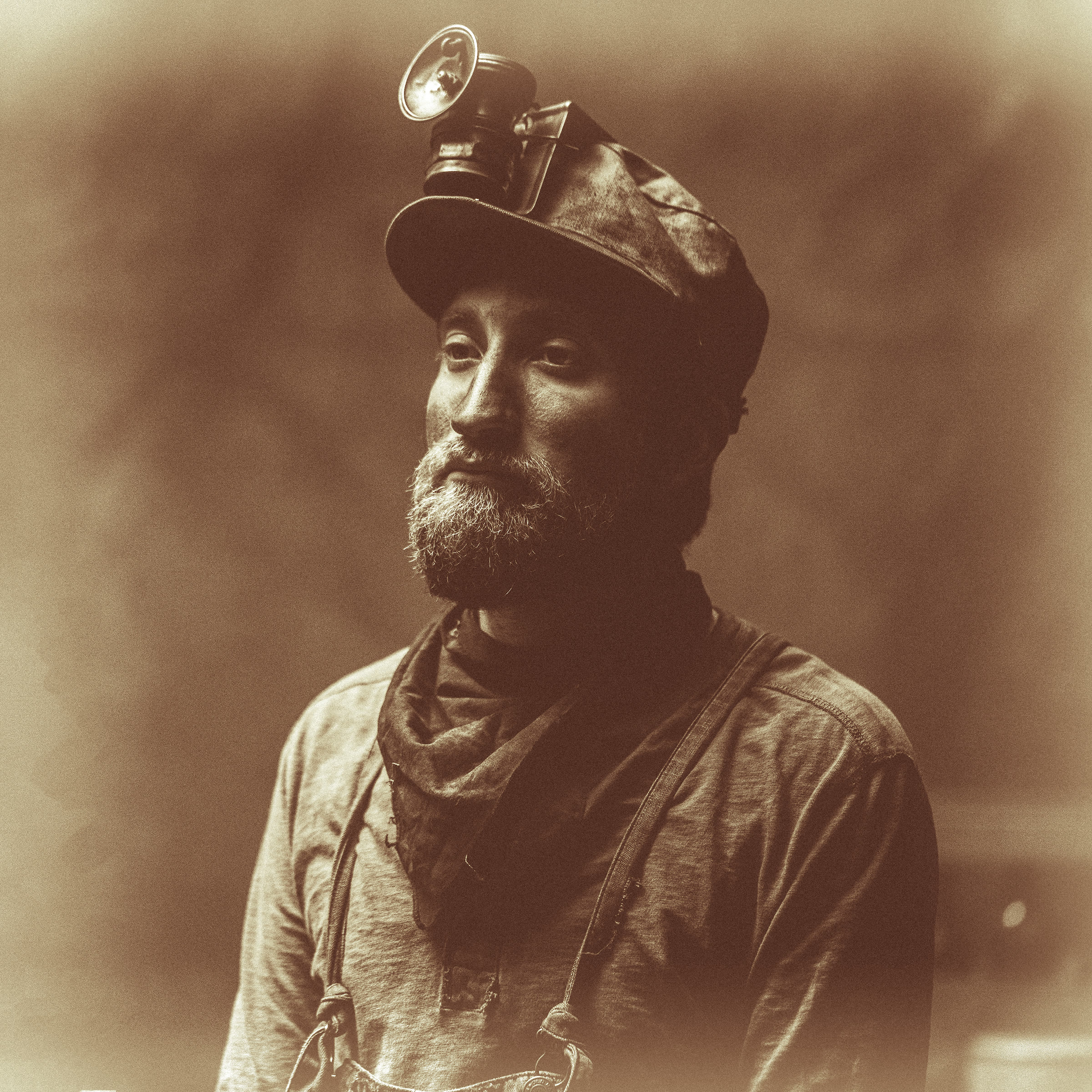
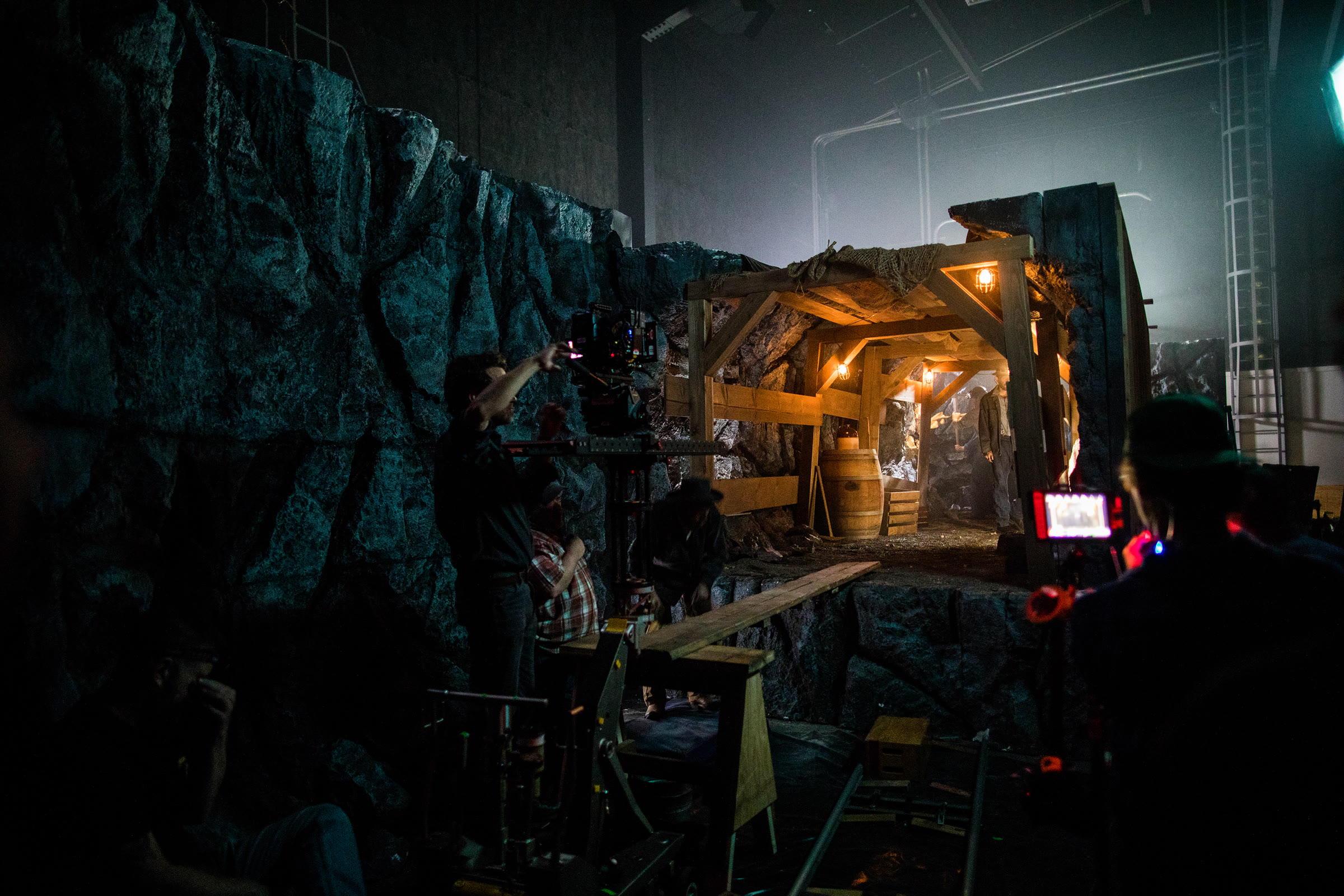
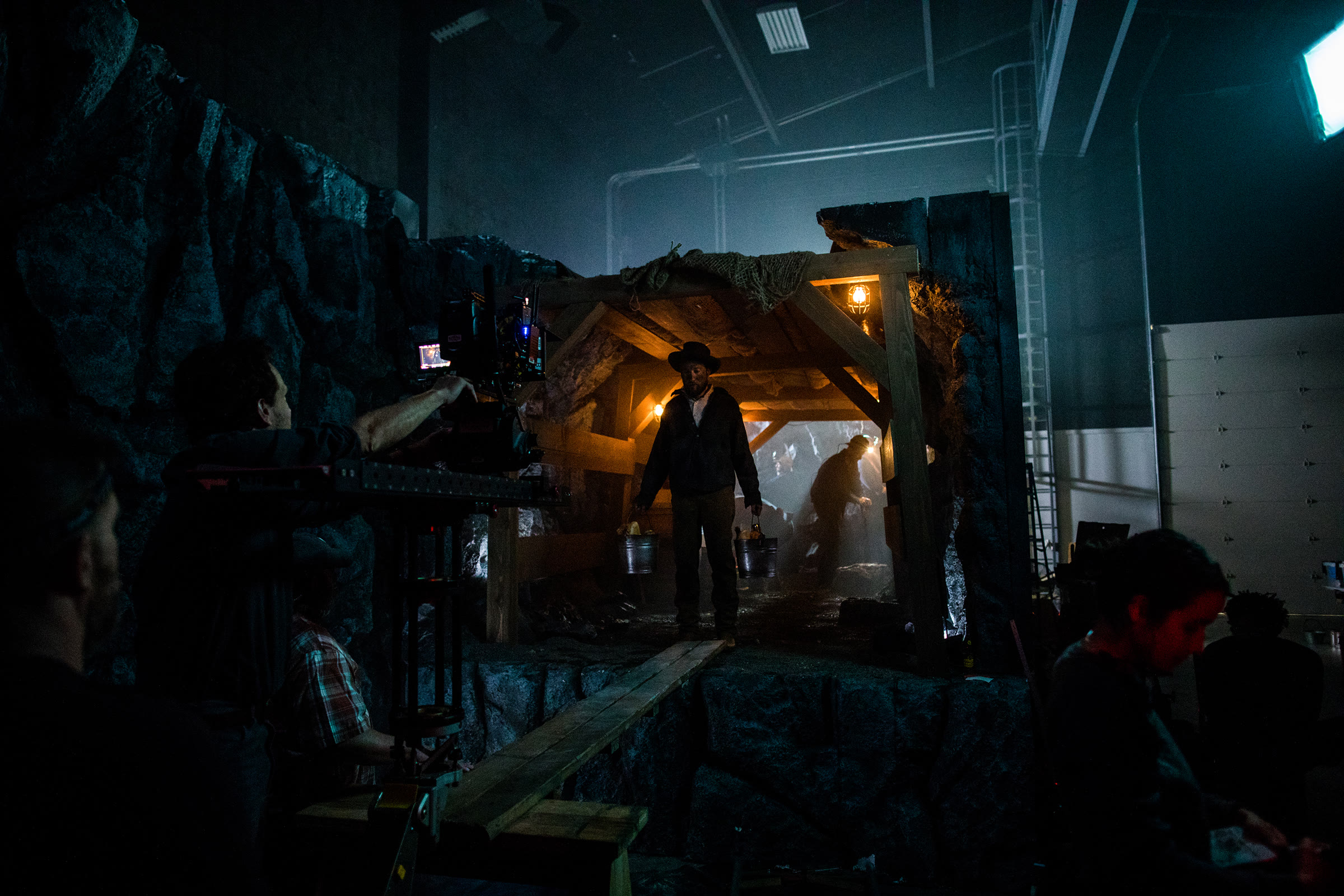
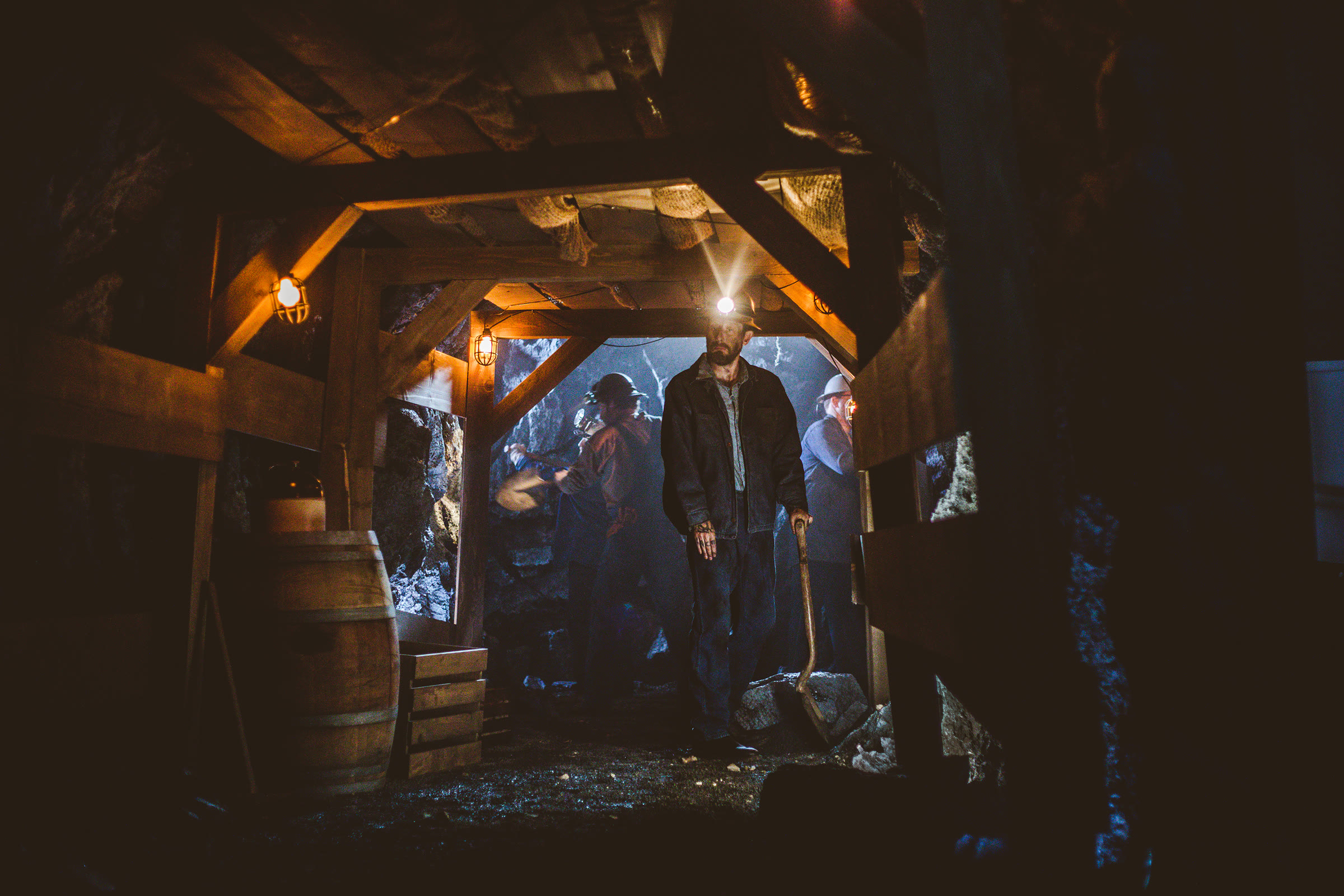
A mine shaft set for an episode of Haunter, a ghost hunting show that was part reality, part recreation and part improv. For this episode centered around the reported hauntings inside an abandoned gold mine in northern California, we needed a space to turn improvised candid dialog centered around fantastical retellings of ghost stories into live-action comedy. As the production designer I designed the set, sourced props, managed the build, shoot and strike over 13 days in 2019.
| Mark | Issue | Description |
|---|---|---|
| Brief | A section of timbered mine shaft for the episode’s reenactment. | |
| Design · 3 weeks out | A working model runs the concept past the director, DP and gaffer, and briefs the shop. Dimensioned drawings issued. | |
| Build · 8 days | Eighteen foam blocks carved and painted to read as rock, off-site in the RT shop. | |
| Assemble · 2 days | Set stood up on the Spiderwood stage, alongside two companion sets for the same shoot. | |
| Shoot · 2 days | Antique headlamps wired to dim; two tons of crushed basalt down for the floor. | |
| Strike · aired | Struck in a day. The episode aired February 2020 — the footage and these stills are what’s left. |
Brief
A-205 · 1.0In Haunter, every episode has five comedians turned ghost hunting enthusiasts gather at their clubhouse, where one of them shares the tales of a haunted location they’ve researched, which gets combined with comedic reenactments of the stories, then the crew goes to the location for a ghost hunt. This one drew on the real Kennedy Mine in Jackson, California, and my department was charged with building the set for the reenactment.
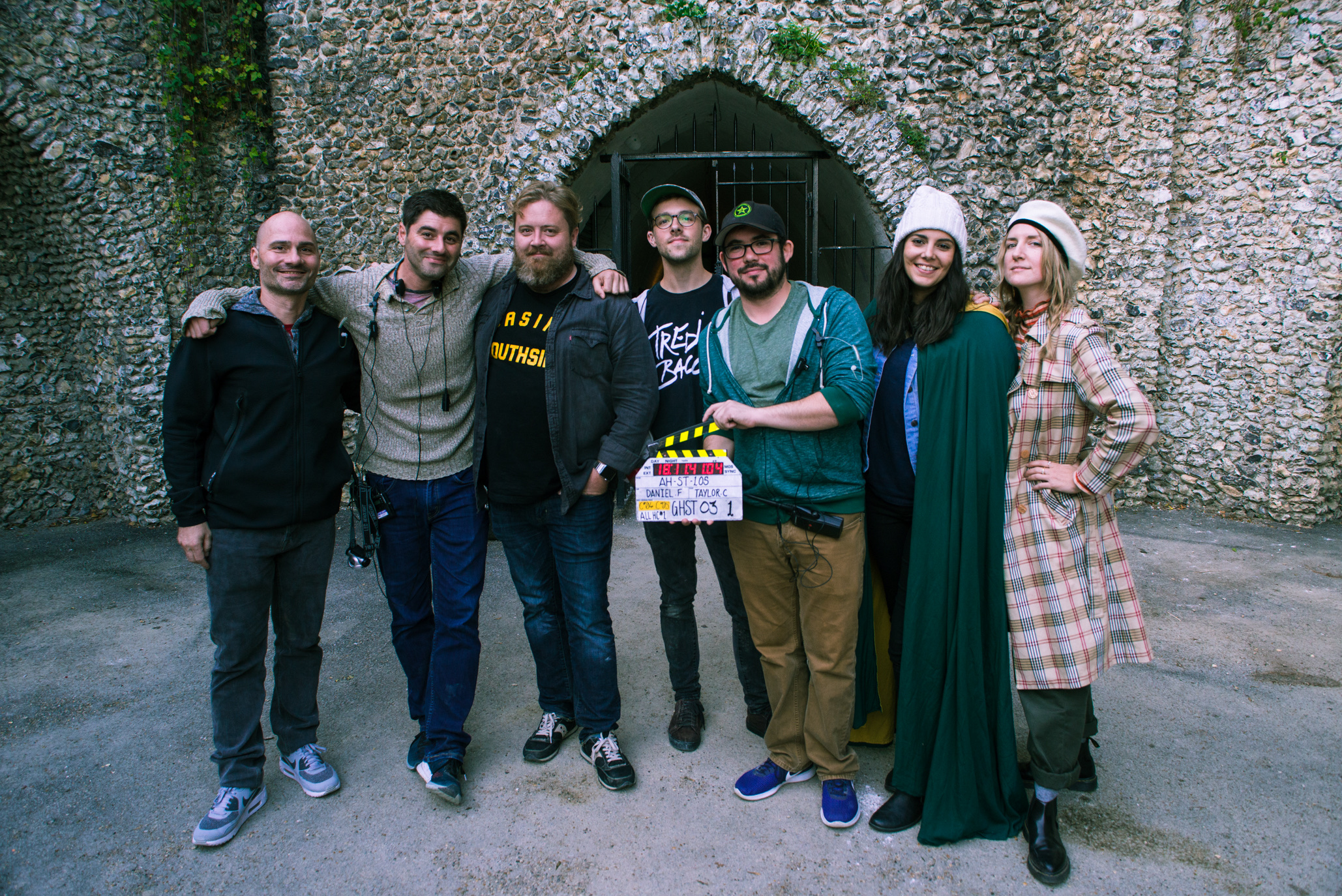
I was the production designer, running a twelve-person department — an art director, three carpenters, two sculptors, a scenic painter, three set dressers and a prop master. I drew the set and I ran the crew that built it, off the same drawings. This sheet follows it in that order: drawn, then built, then dressed.
- Build, off-site8 days
- Assemble on stage2 days
- Shoot2 days
- Strike1 day
The plan
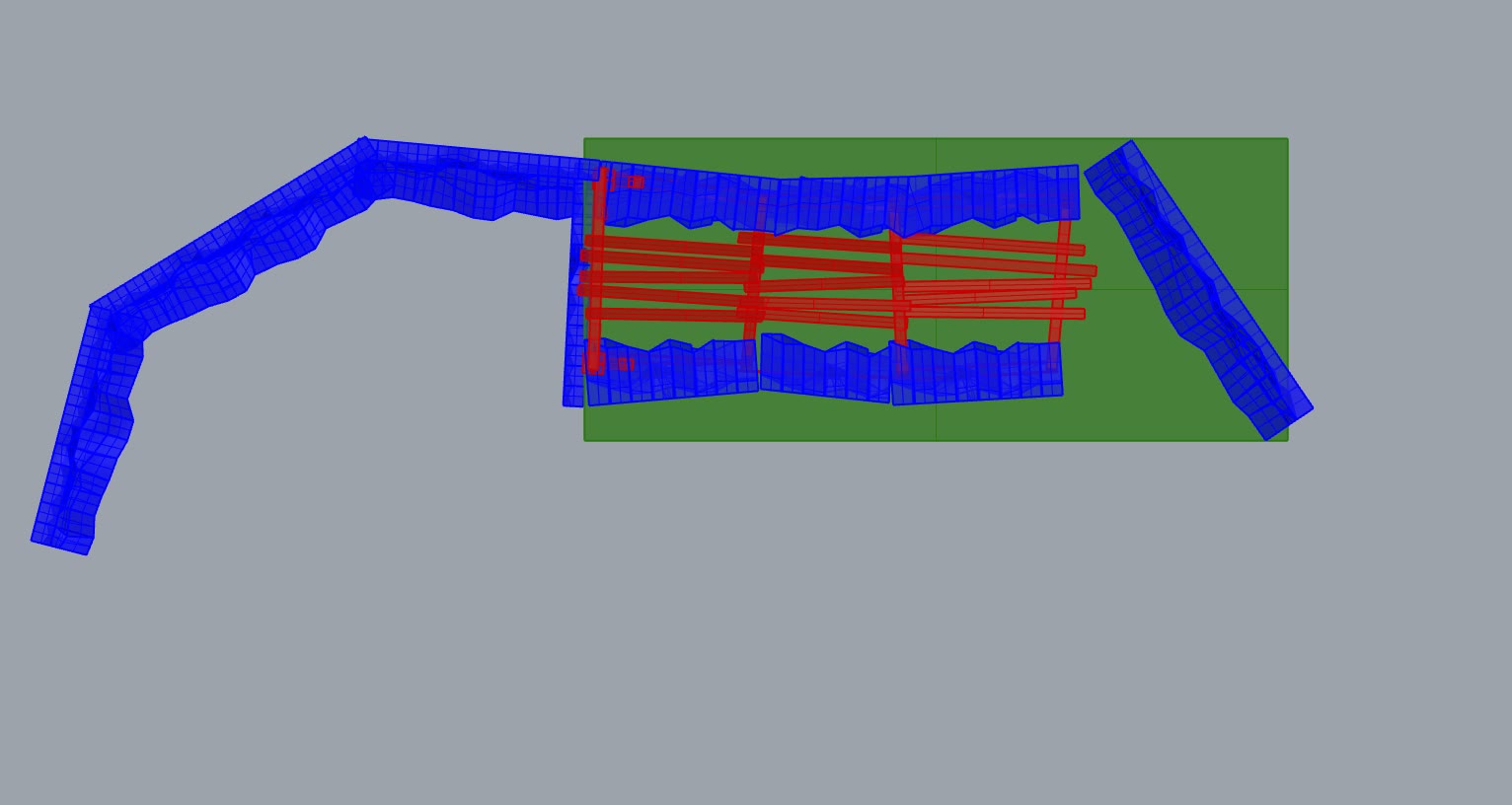
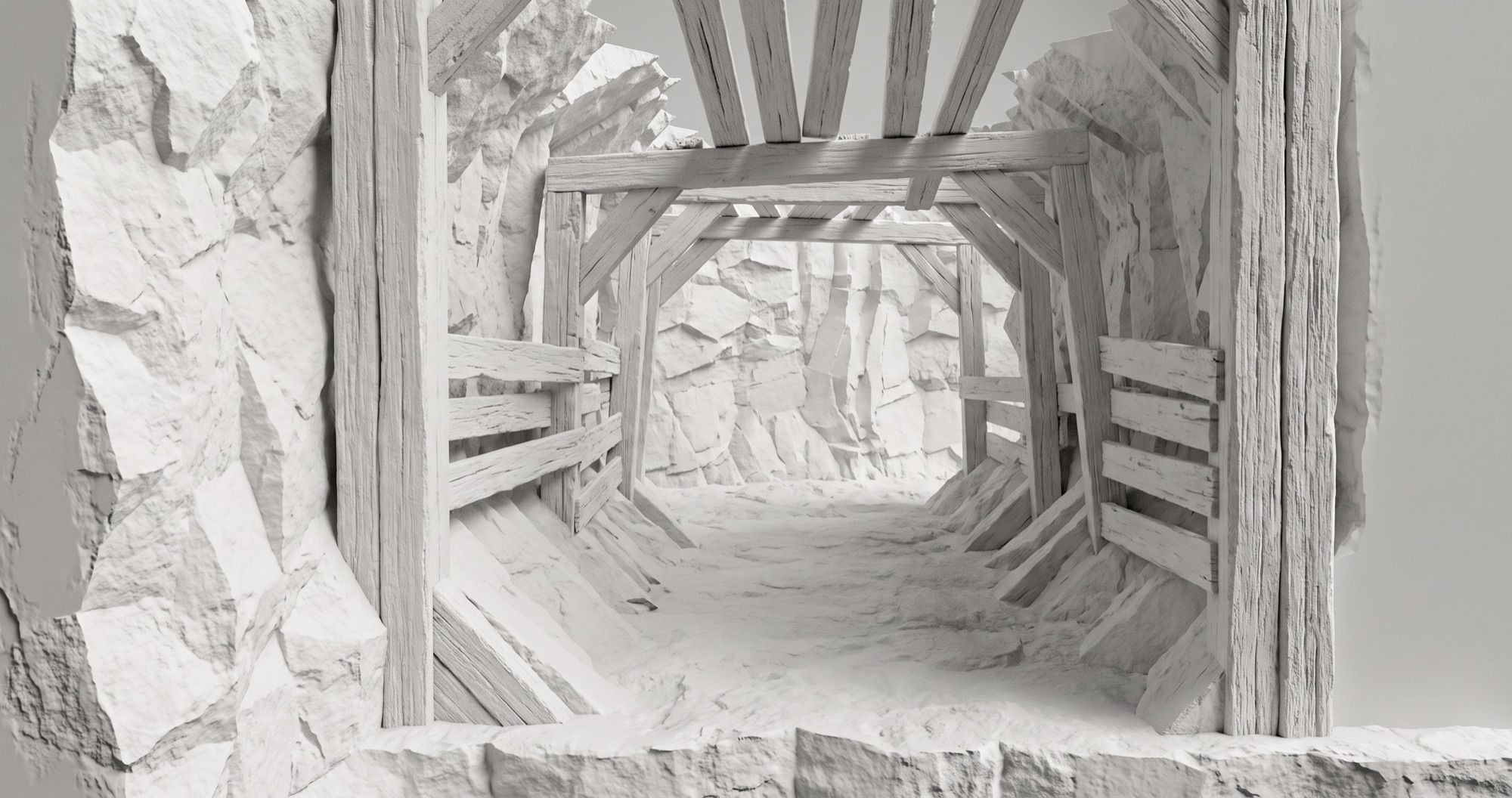
A-205 · 2.0Design ran about three weeks ahead of the shoot. A 3D model of the set allowed the director, cinematographer and I to plan how to get the footage we needed out of the smallest footprint possible. My dimensioned drawings went out from there and work got started in the shop.
None of the tunnel is straight, flat or square. The framing fans and leans on purpose to give the sense of slapdash work and a dangerous atmosphere.
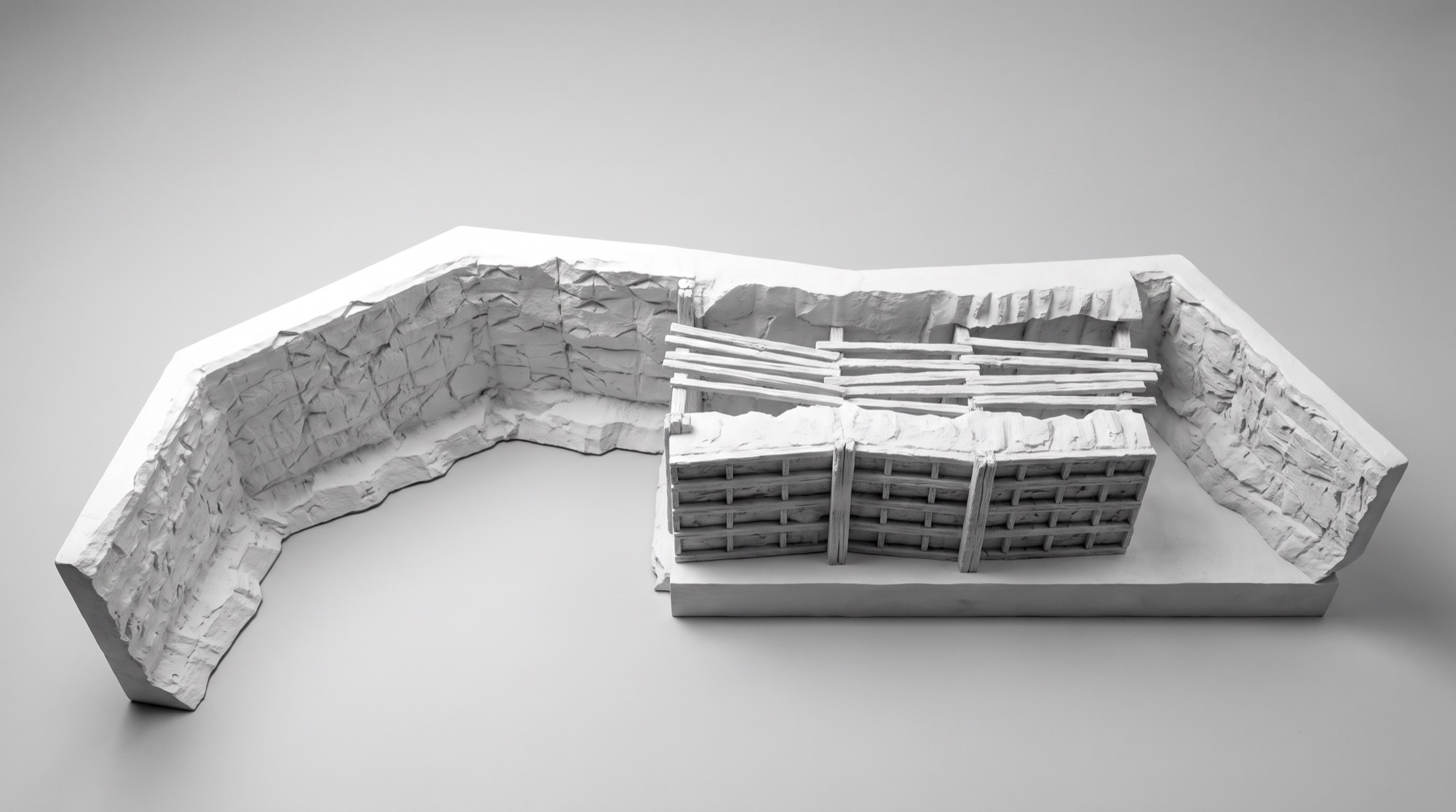
2.1The rock. Sculpted walls in a long serpentine run that reads as the mine cut.
2.2The timber. The bents, caps and rails the shaft is framed from.
2.3The deck. The raised platform the tunnel sits on, its front edge faced in rock.
2.4The flats. What the carved foam mounts to. Foam on flats, so the set builds off-site and stands up on the stage.
Built from these four — see section 3.0.
Fixed conditions
These notes govern section 3.0.
N1 · CameraSet built specifically to accommodate camera setups.
N2 · BudgetTight budget and tight timeframe meant I came in on weekends and worked as a sculptor and scenic painter.
N3 · ModularCarved foam on flats, built off-site to stand up on the stage. The whole set has to come apart.
The build
A-205 · 3.0Eighteen blocks of foam.
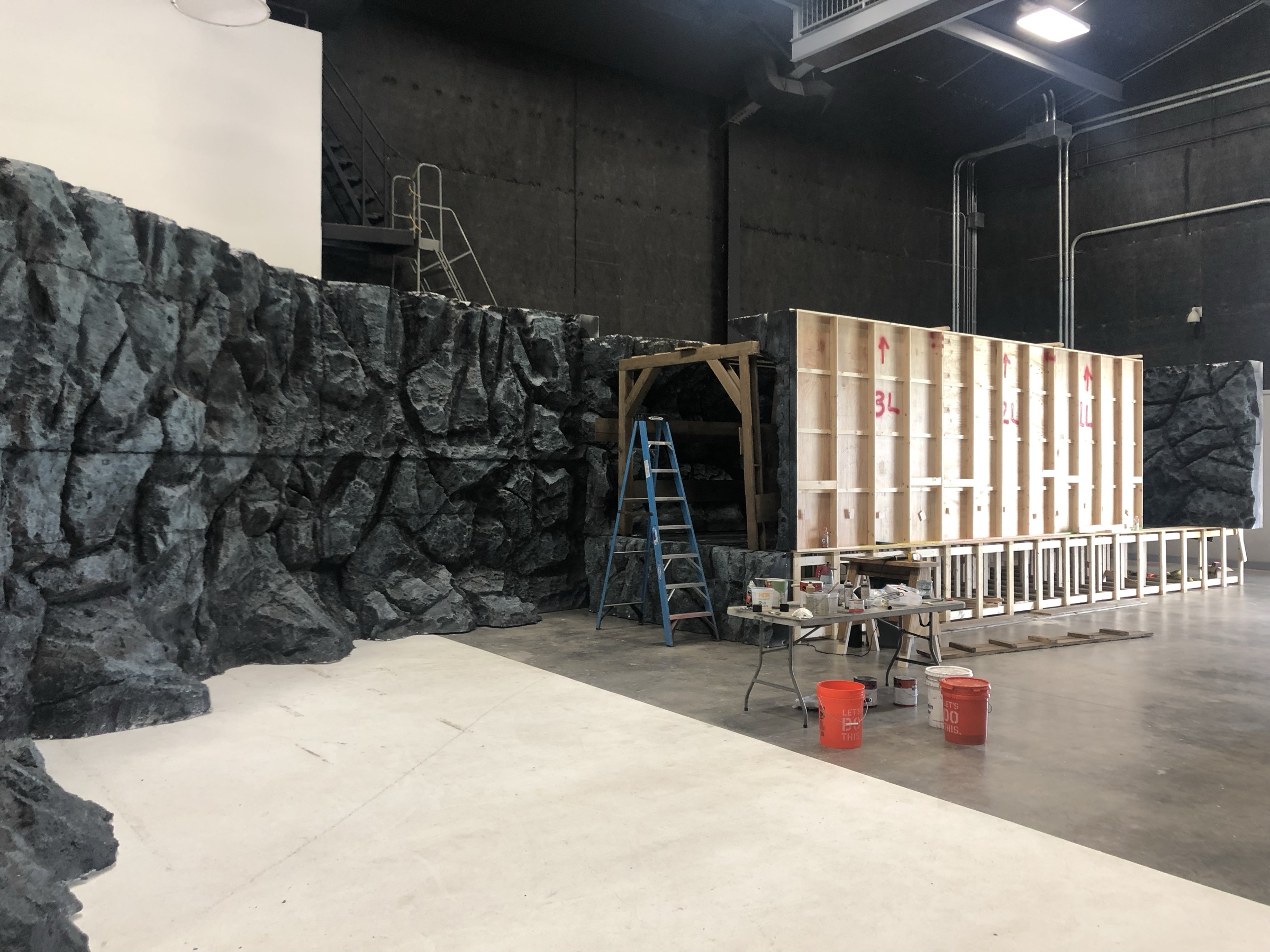
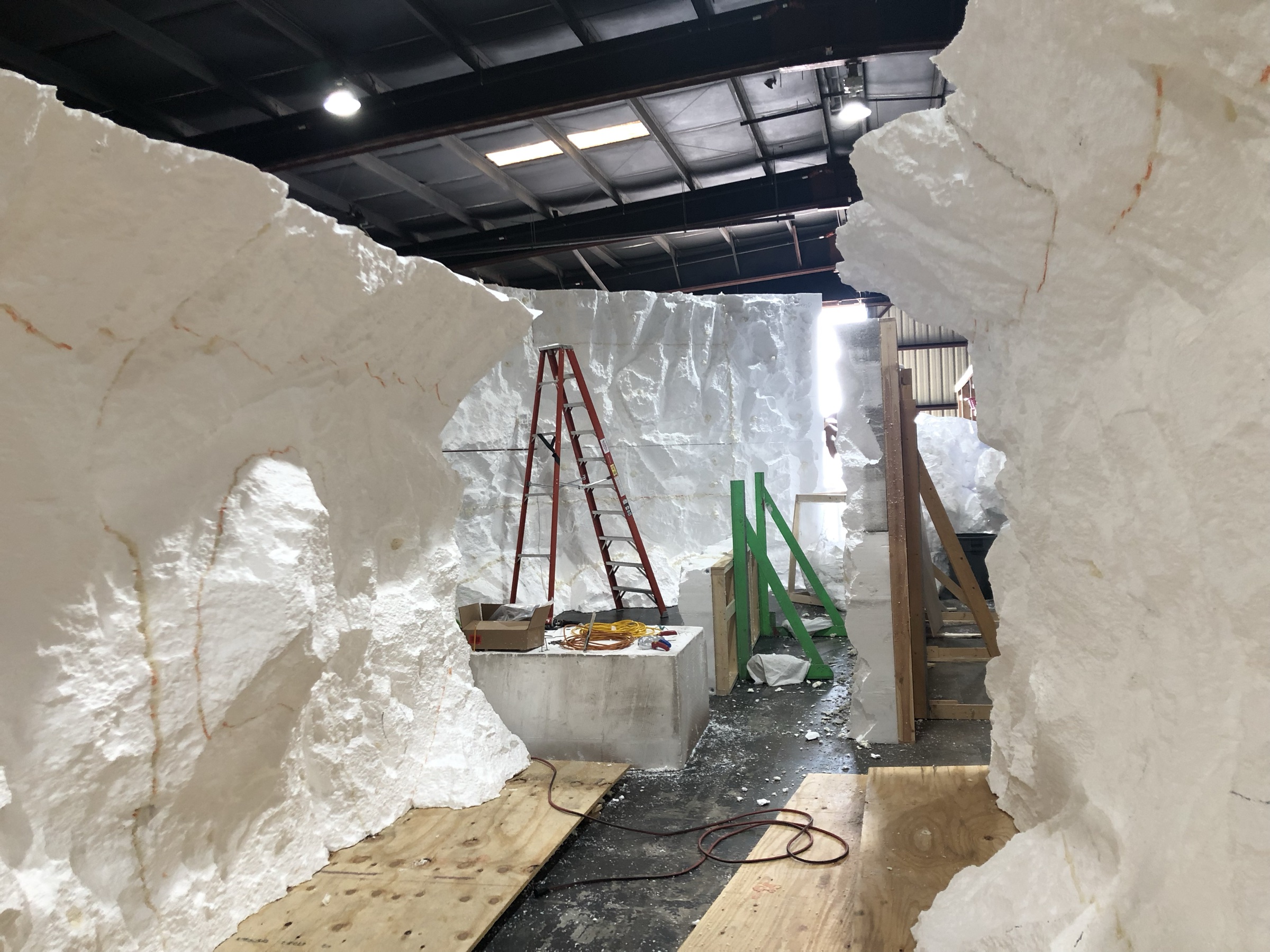
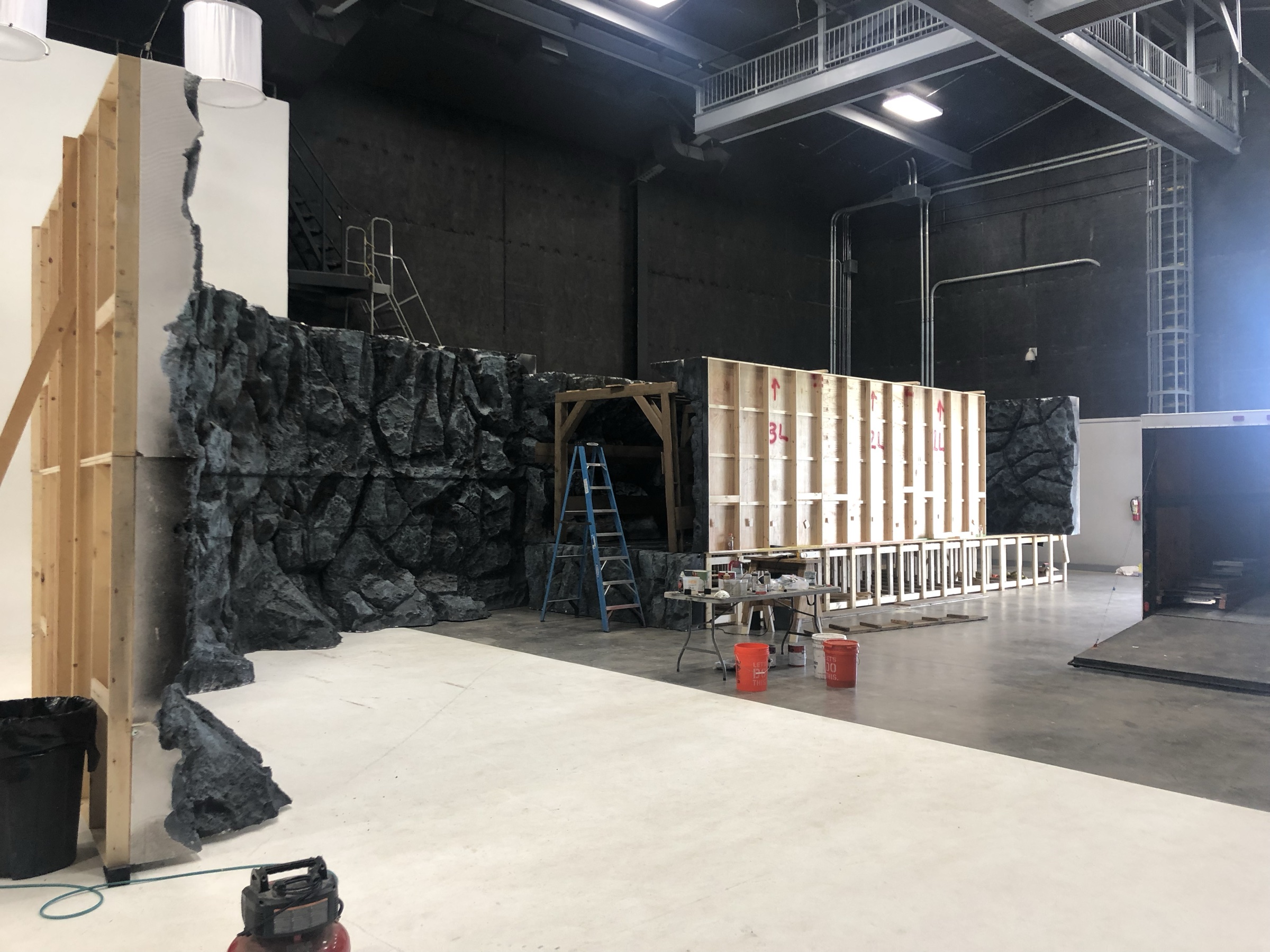
On camera, the rock has to survive up close. We carved the walls from eighteen blocks of styrofoam — four by four by eight feet each — and painted them to read as wet, fissured stone. The sculpting-and-painting budget was thin for a set this size, so I stopped being only the designer. I worked the detailing pass alongside the sculptors, then over a single weekend laid the sealant, the primer, the base coat and the rough contrast shading myself so the scenic painter could put every hour into the fine work that sells it.
A labor of love.
Nothing was built in place. Eighteen carved blocks went onto flats in the RT shop over eight days, then trucked in — the whole set had to break down, travel, and stand back up on the Spiderwood stage in two, alongside two companion sets for the same shoot.
The details
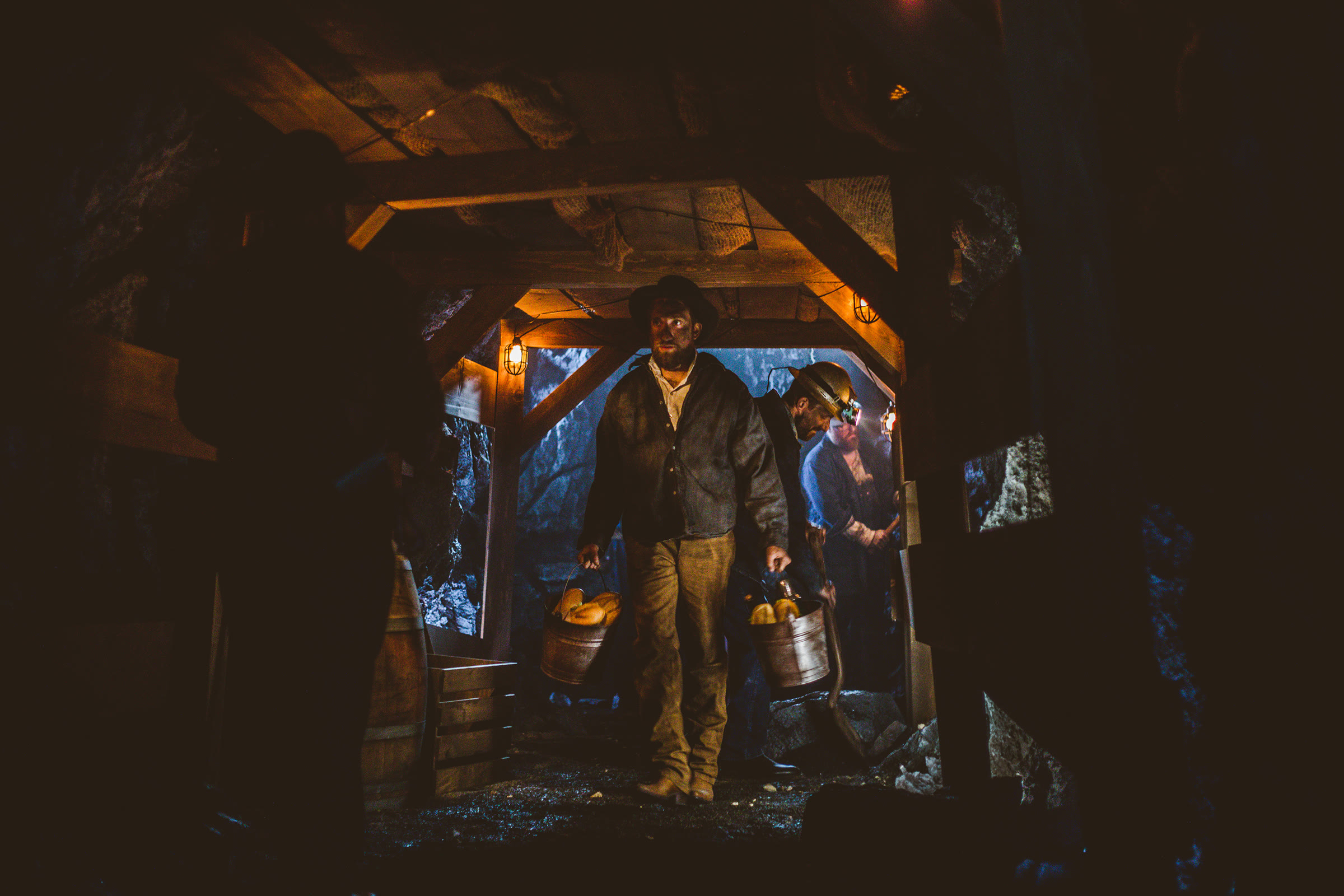
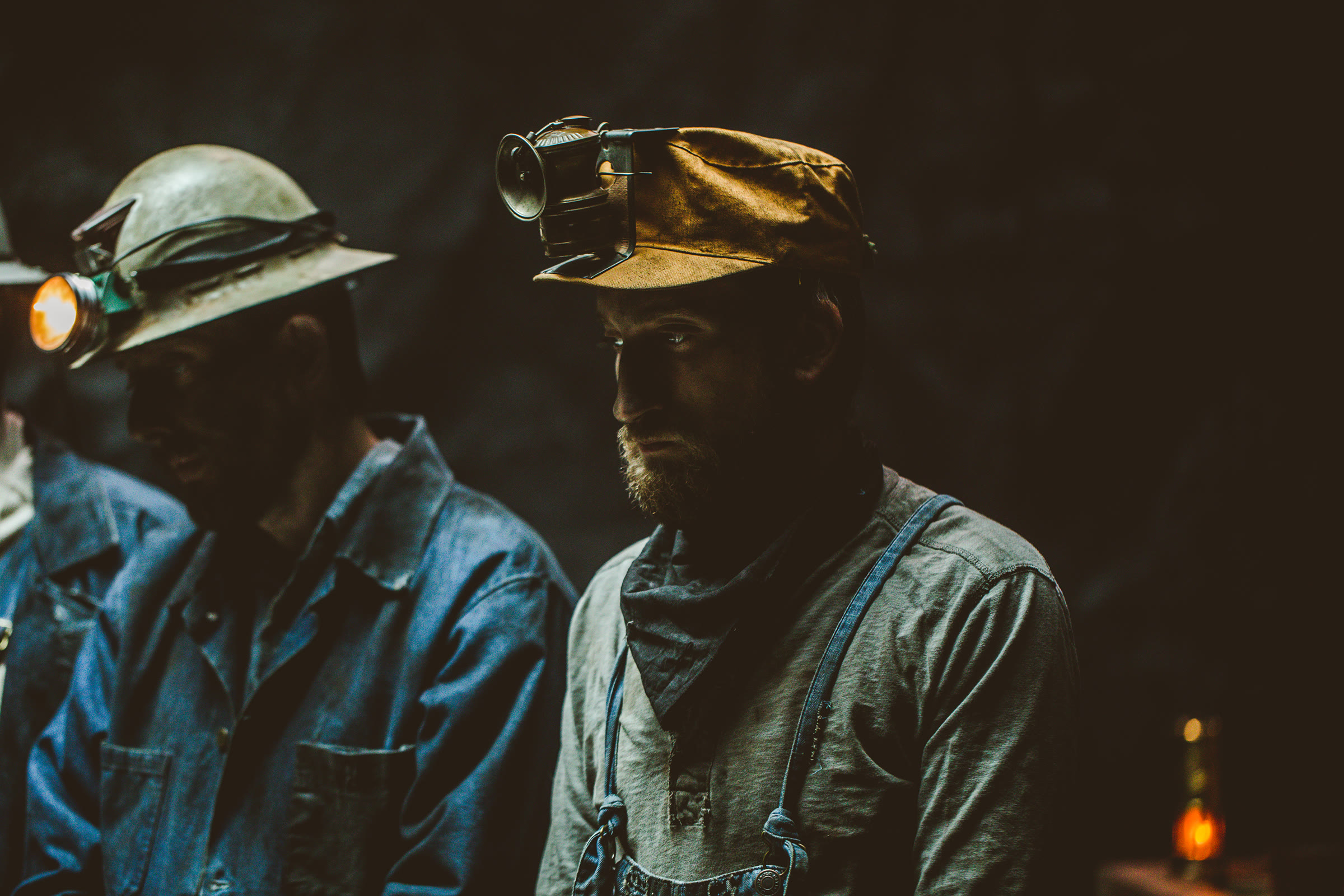
A-205 · 4.0The details make or break the scene. The floor is two tons of crushed basalt, barrels and crates I’d bought for another show and had the crew age for this one. Other props like picks and shovels came from a prop house. And the headlamps are genuine antiques I tracked down, which turned into the one piece of real engineering in the dressing.
I wired the antique lamps to be dimmable. Some shots needed them bright, to punch through the atmospheric fog; others needed them low, so the light wouldn’t wash out the actors’ faces.
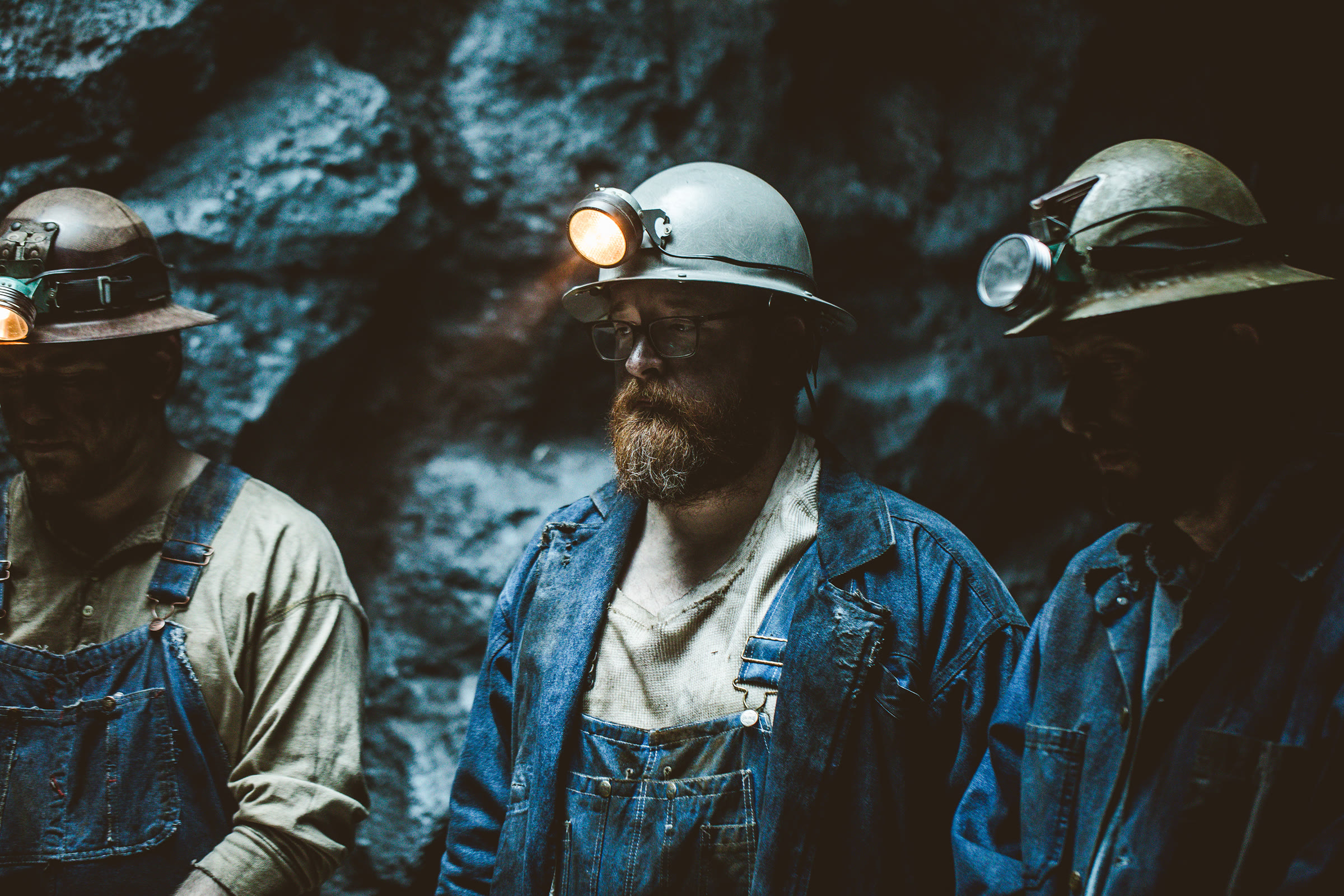
4.1Headlamps. Genuine antiques, sourced and then wired to dim. Bright for the fog, low for the faces.
4.2Barrels + crates. Bought for another show, re-aged by the crew for this one.
4.3Picks + shovels. Rented from a prop house.
4.4Basalt. Two tons of crushed rock, laid as the shaft floor.
Real materials, because the camera gets close.
Credits
A-205 · 5.0The set was struck in a day along with two others built in the same studio. Being able to be out in a day meant being able to allocate money to my budget for upcoming episodes instead of soundstage rental.
Neither the dimensioned drawings nor the set survive. The design model and the shoot stills are what’s left — and this sheet is built from both.
- Stephen FayProduction designerSet design and dimensioned drawings; ran the department. The detailing pass and the weekend sealant-to-shading paint.
- Art departmentRooster TeethArt director, three carpenters, two sculptors, a scenic painter, three set dressers, a prop master.
- Prop houseRentalPeriod picks and shovels.
- ProductionHaunter · S2A Rooster Teeth show. Aired February 2020 on their platform and other WarnerMedia platforms.