Case study · Rooster Teeth · Austin, TX
Death Battle.
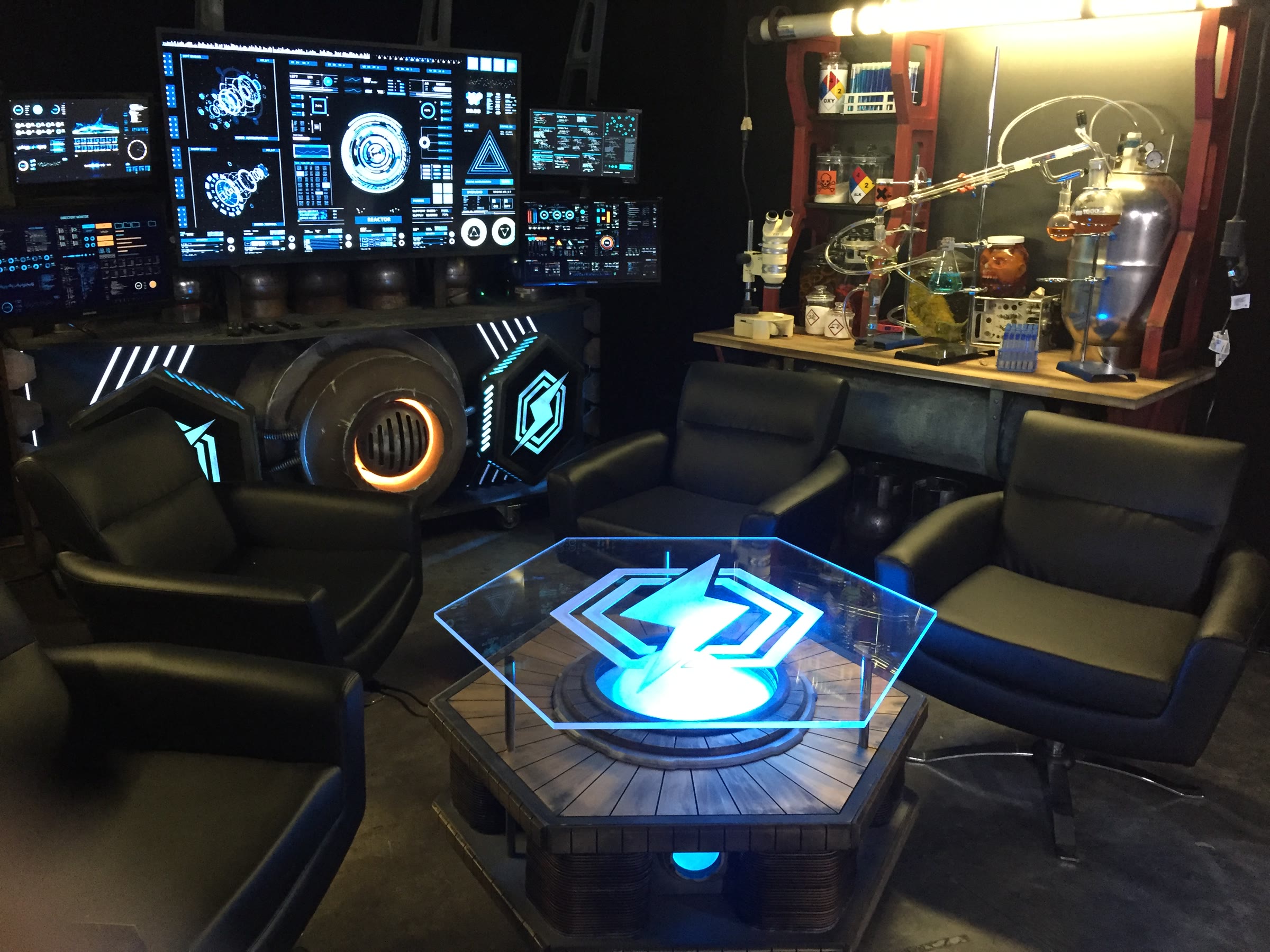
The set for a podcast in Rooster Teeth’s Death Battle franchise, where the hosts argue about video games while in character. Three rolling set pieces speak to those character traits, plus the hex table all four face were all designed, built, painted, dressed, and installed by me personally in three and a half weeks.
| Mark | Issue | Description |
|---|---|---|
| Brief | Three host character profiles. Three set pieces asked for, plus a shared table — and a roll-in / roll-out, finite-storage spec. | |
| Concept | “Borderlands, but the inside of a spaceship.” Approved with no notes. | |
| Model | One Rhino model sells the design and proves the roll-away spec at the model stage. | |
| Part files | Model pulled apart into a CNC part-file list. Domes vacuum-formed; heat-sink stacks laser-cut. | |
| Dress | Surplus finds matched the modeled dressing. Nerf kitbashes, greeking labels, dry-brush finish. | |
| As built | First shoot January 2018. Solo, 3½ weeks, under 5% below budget. Zero repairs after handoff. |
Brief
A-209 · 1.0The set was for a podcast in Rooster Teeth’s Death Battle franchise — the hosts argue about video games, in character. I was handed the hosts’ character profiles and asked for three set pieces that read as those characters at a glance. The look came with a one-line style brief.
“Like Borderlands (the game franchise) but like… also the inside of a spaceship.”
The real problem wasn’t the look. The podcast shared its studio with other shows, so on record days everything had to roll in, then roll back out to a finite storage footprint — moved by the hosts themselves, not stagehands. The brief underneath the brief was scenery a non-technical team could deploy and strike on their own.
- Main backdropspace pirate
- Armoryfirst-person shooter
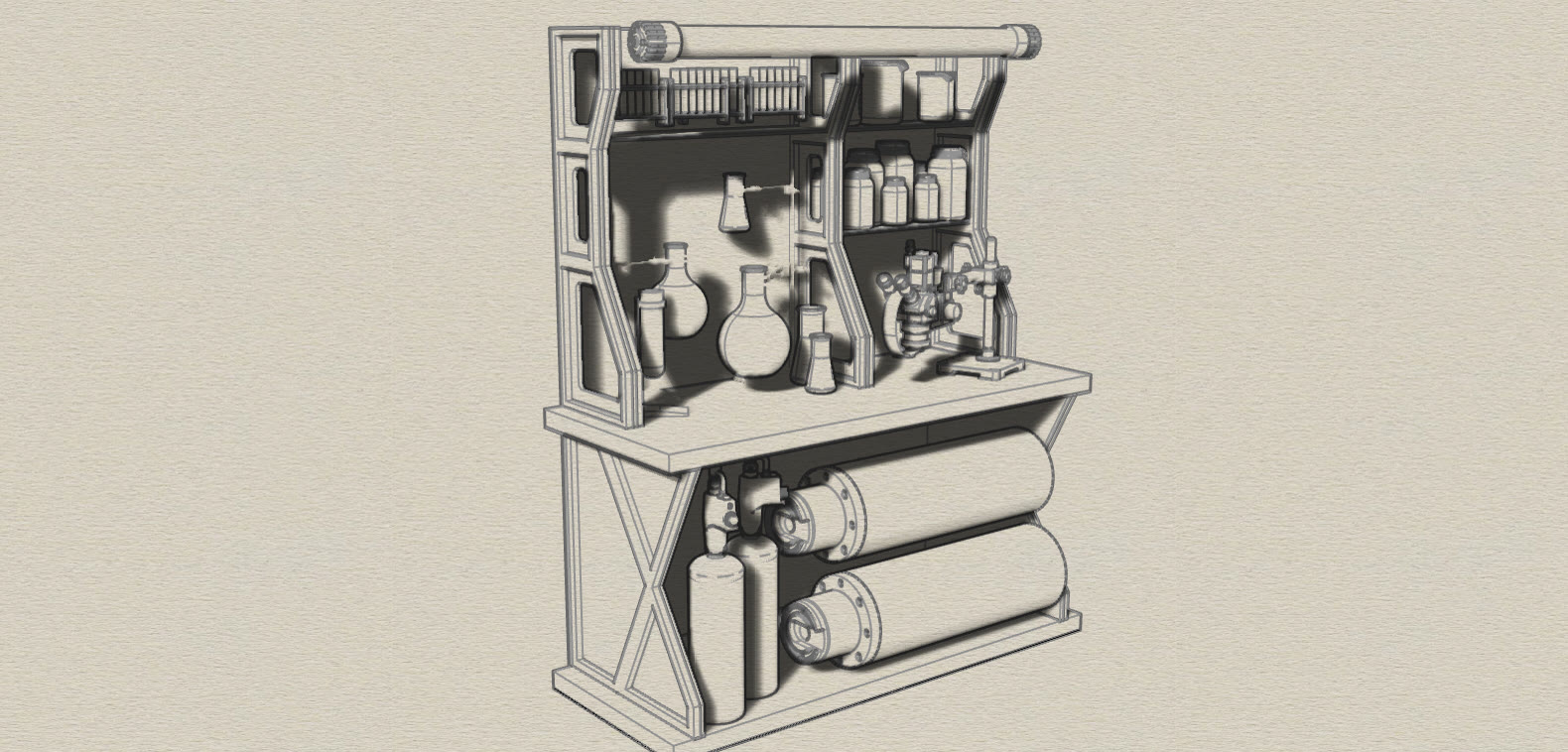
- Labevil genius
- Hex tablecommand deck
- Everythingon casters
The SET
A-209 · 2.0One piece per host, plus a table to argue across. Each set piece is a character read at a glance: a control-panel deck for the space pirate, a weapon wall for the shooter, a lab bench for the mad scientist. The four chairs face a hexagonal table that brings the branding front and center.
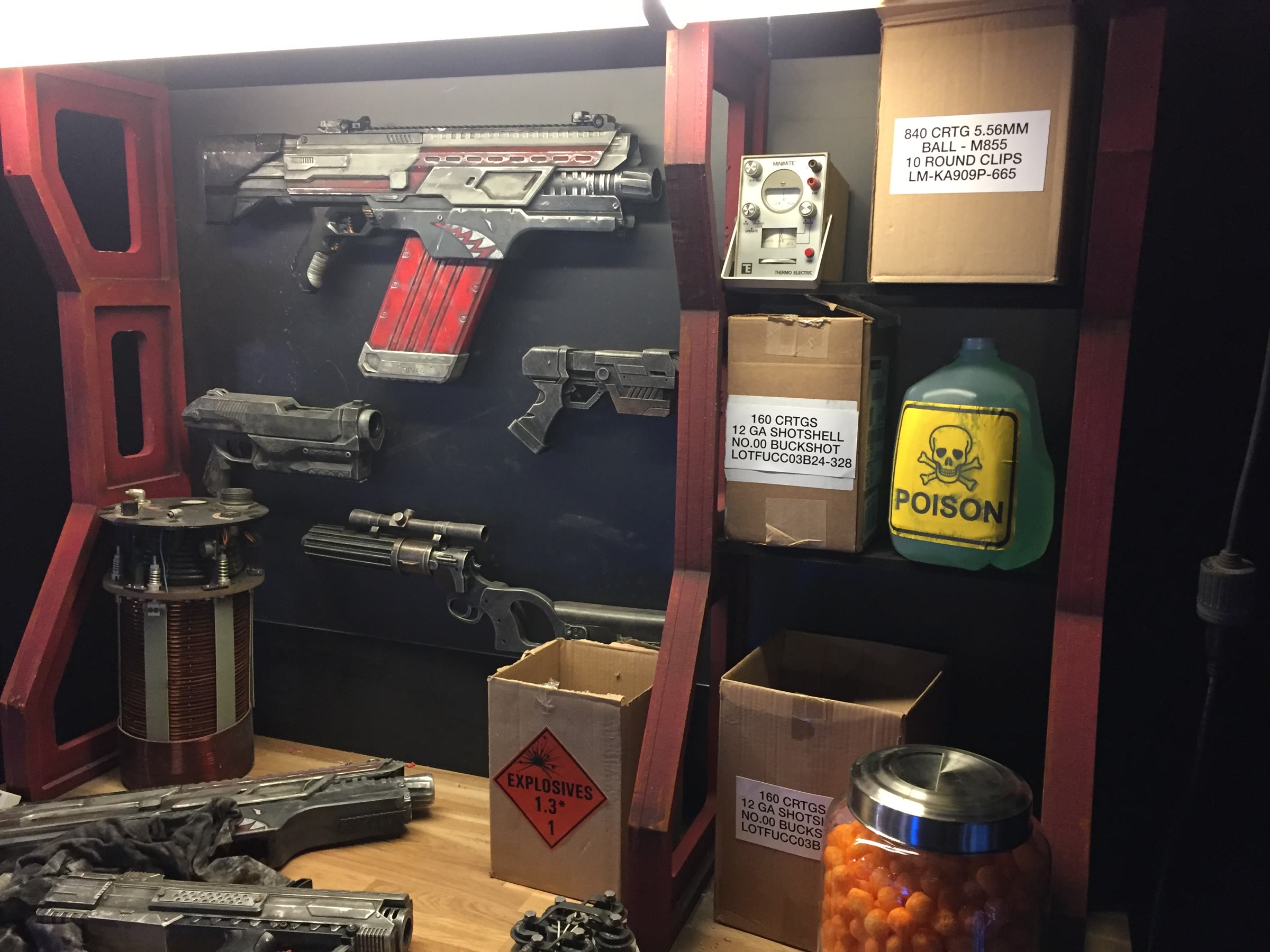
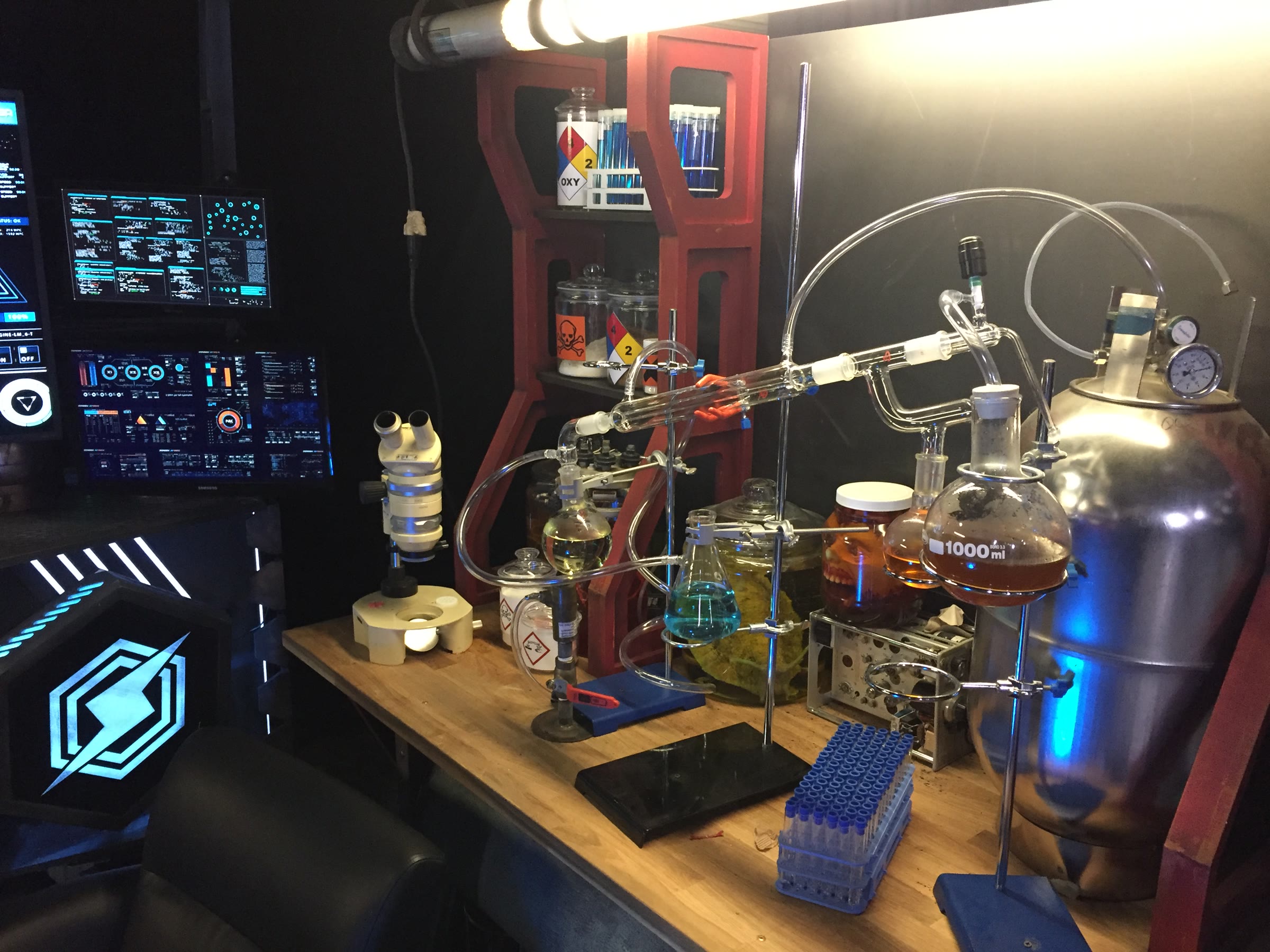
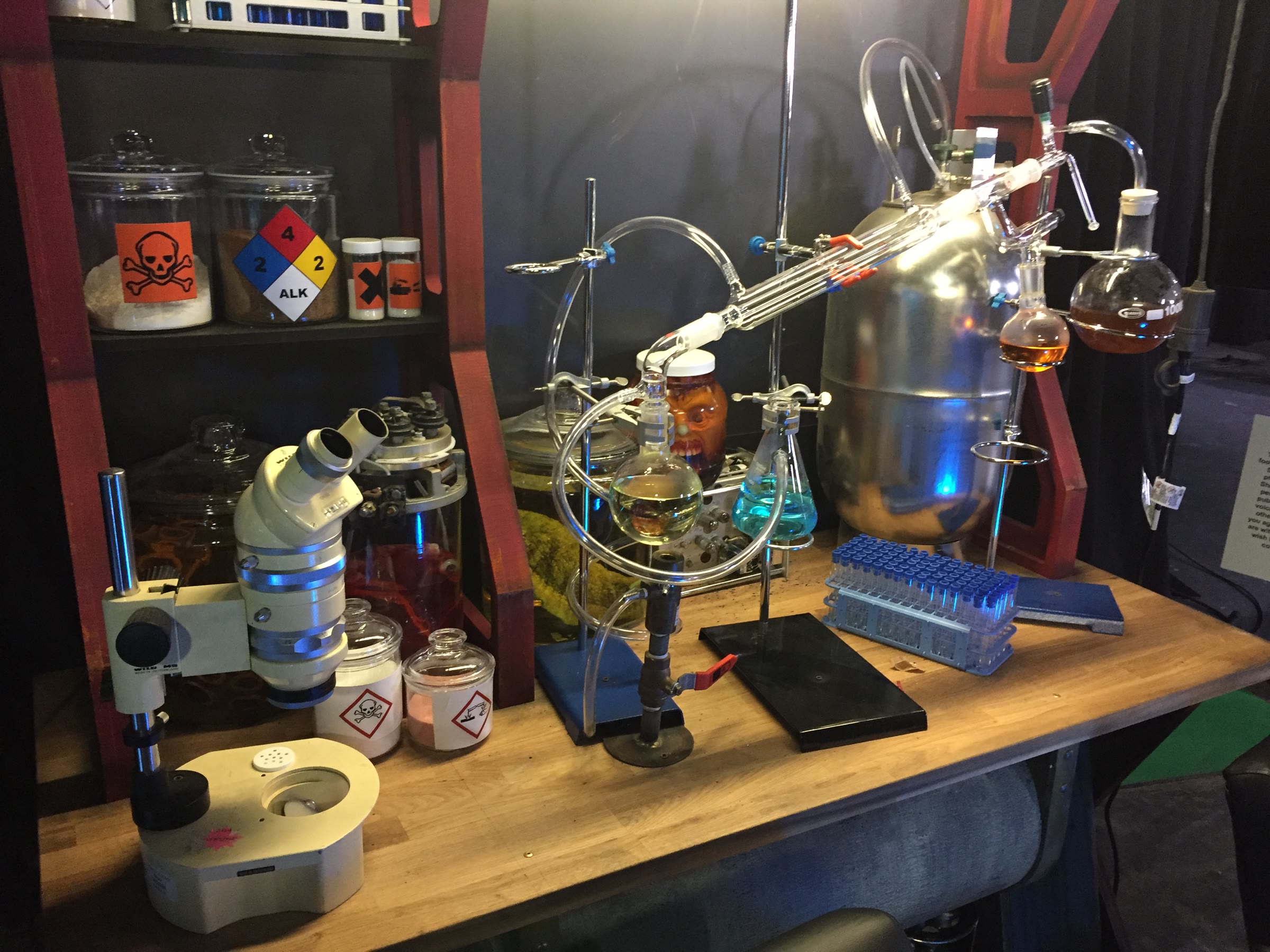
The dressing carries the joke. A sculpted head floats in a specimen jar; a milk jug wears a POISON skull; ammo crates carry invented lot codes and hazmat diamonds. Those labels came out of a greeking kit I’d built up over years of shoots — a sticker for every occasion, ready when you need to hide a logo in a pinch.
The popularity of these podcasts tends to be fueled by fostering parasocial relationships, and therefore everything is an inside joke. Knowing how to properly design this set meant getting to know the cast and producing something that spoke to things that the audience had come to expect from them.
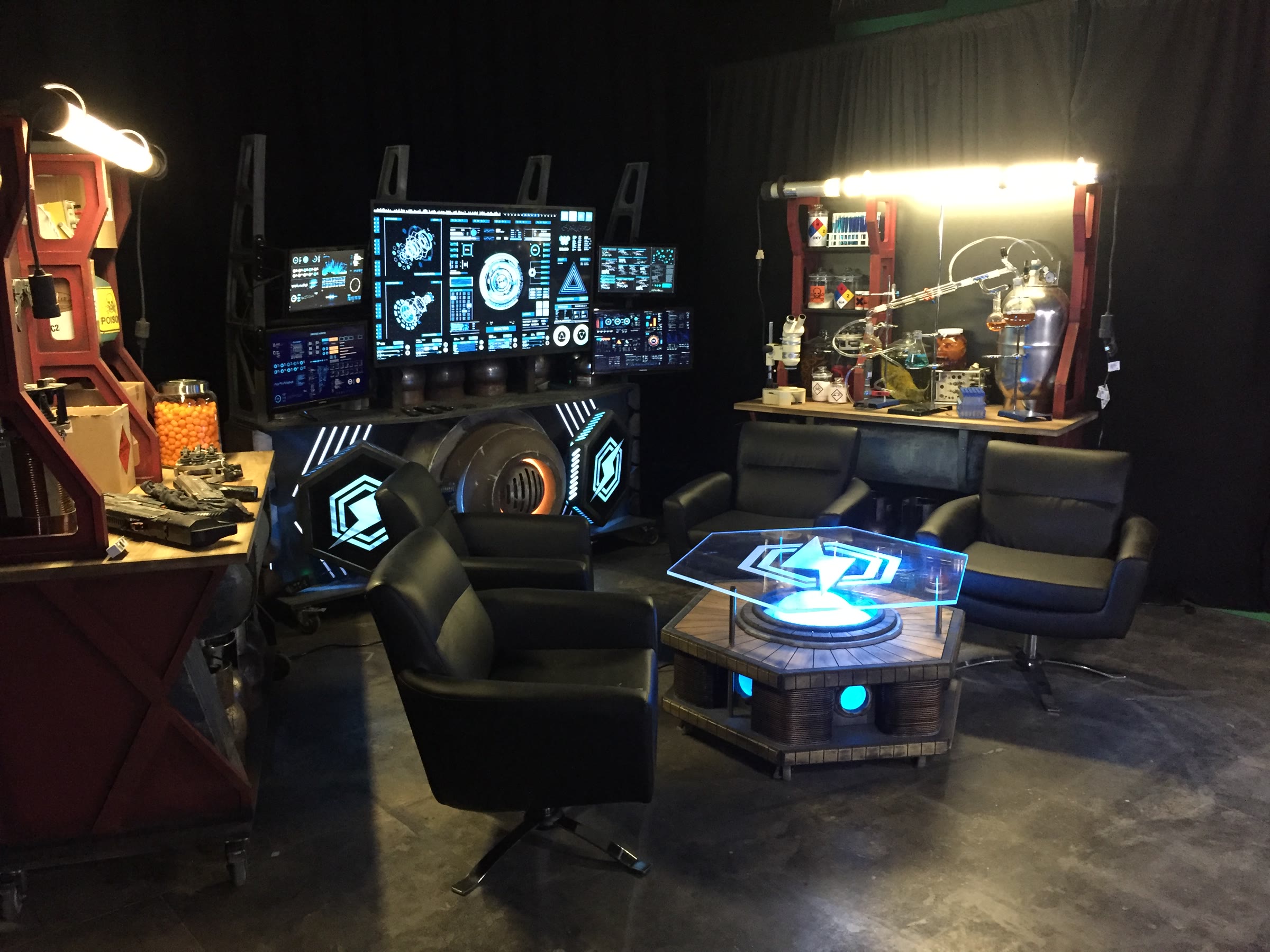
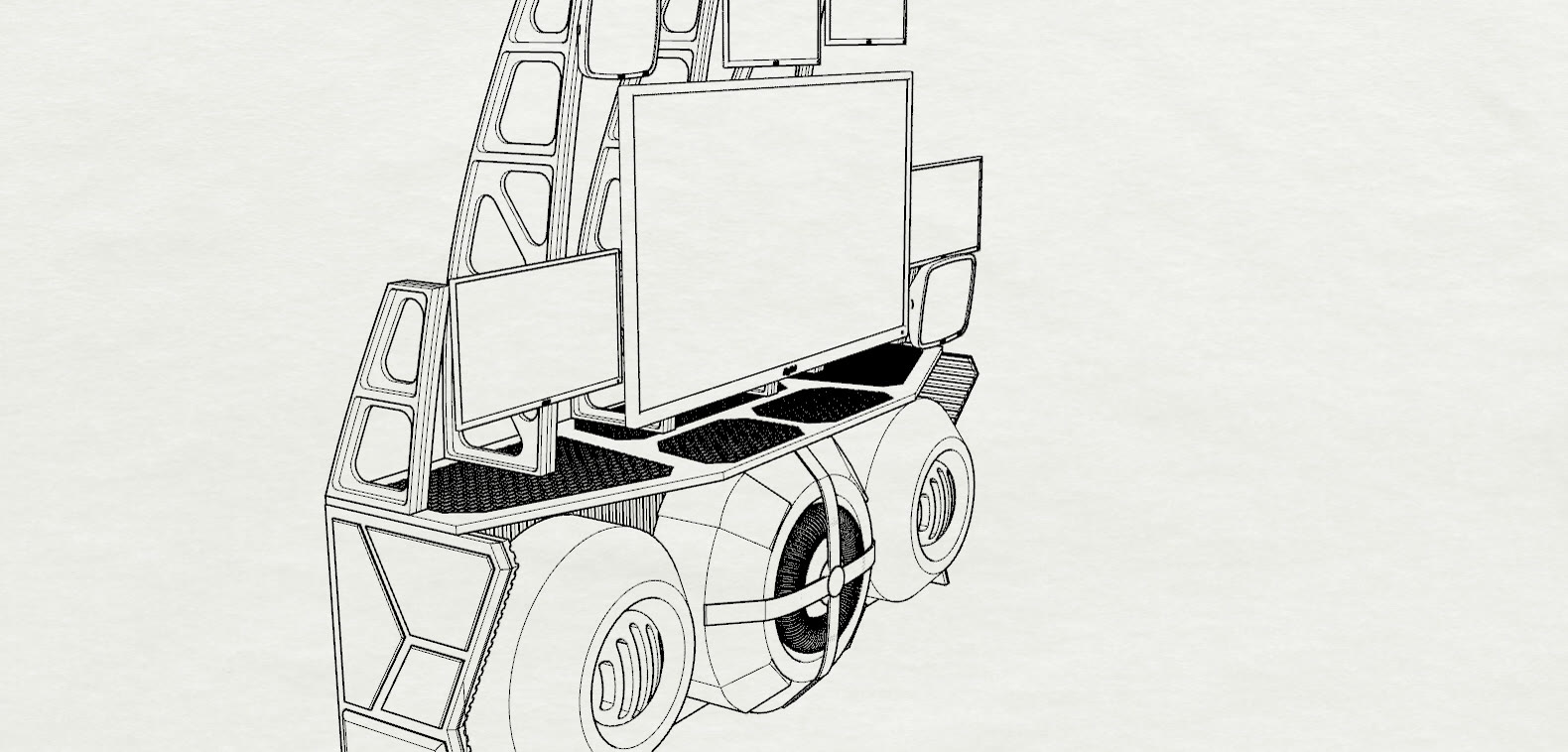
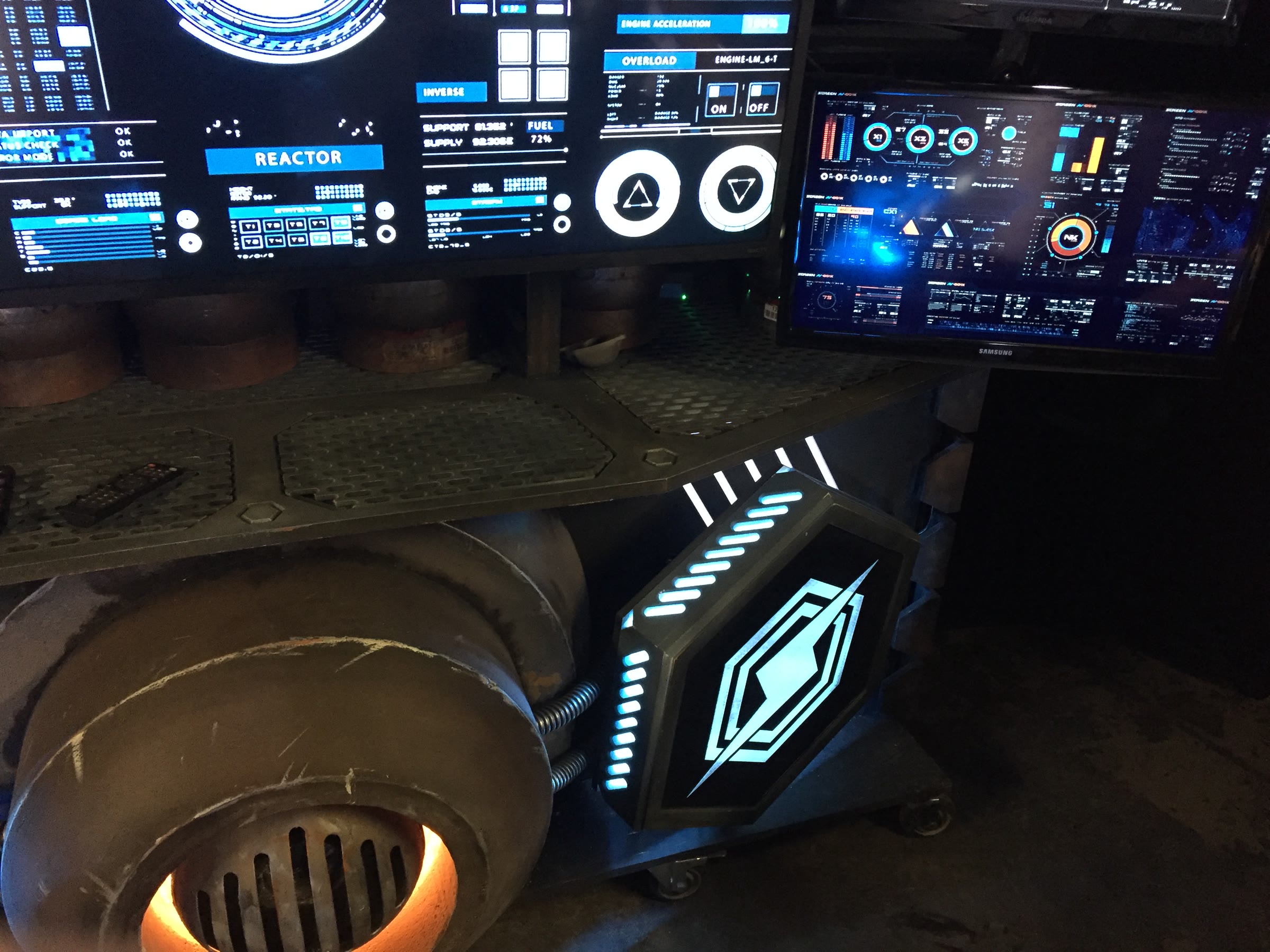
2.1Main backdrop. Control panels, a reactor-core drum, and a bank of practical screens — the space pirate’s command deck.
2.2Armory. A wall of kitbashed Nerf guns weathered to gunmetal — the shooter’s arsenal.
2.3Lab. Jars, a distillation rig, and a stainless tank — the evil genius’s bench.
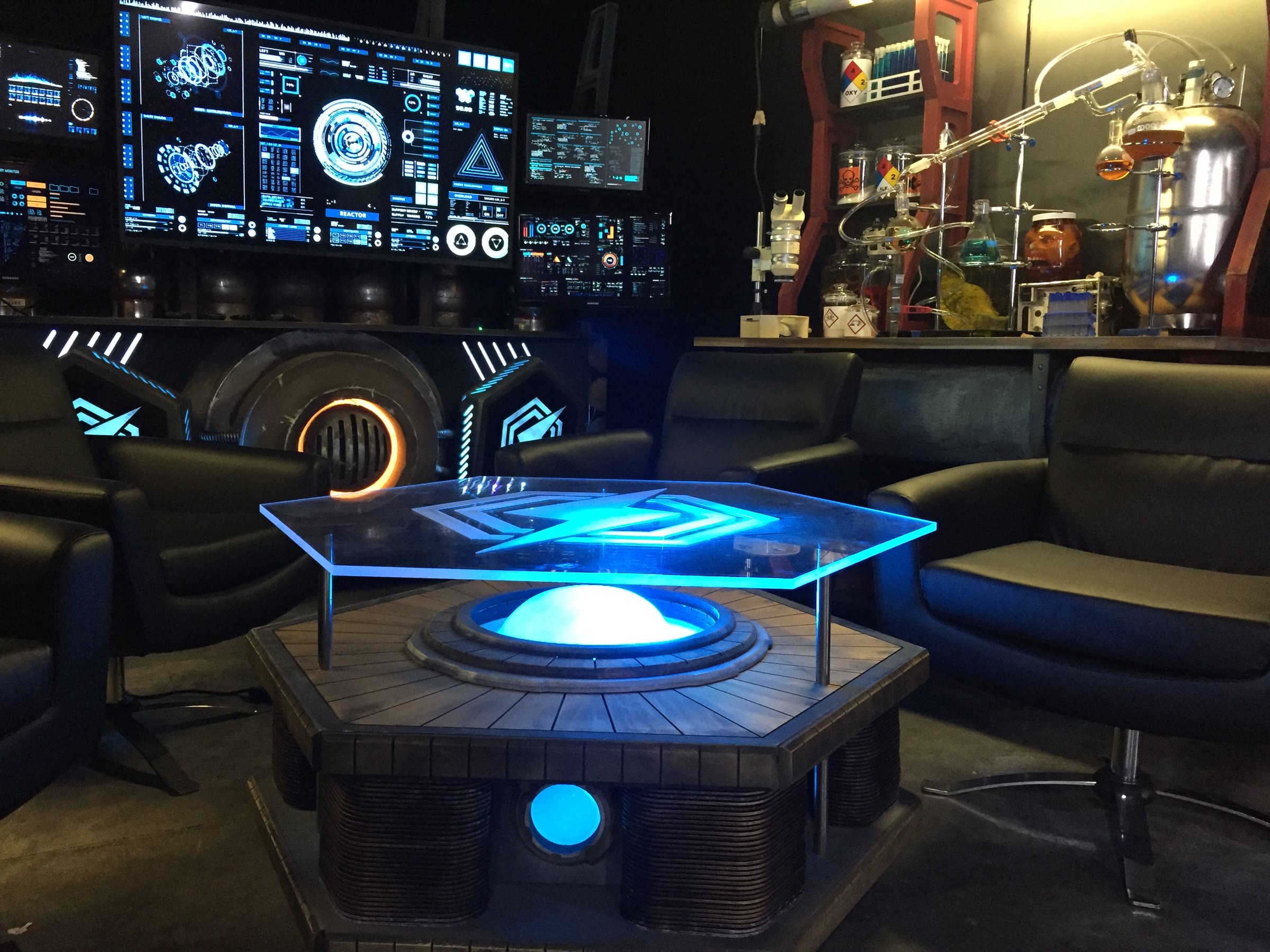
AHex table. The command table all four chairs face. It’s 100% fabricated — see detail D1, section 3.0.
BCasters. Everything rolls but the chairs — see the general notes.
Designed, built, and dressed by one person — see rev △5.
The roll-away spec
These conditions governed every piece.
N1 · SpaceThe podcast shared its studio with other shows. Everything had to roll in on record days and store in a finite footprint between shoots.
N2 · CrewThe hosts move it themselves — no stagehands. Scenery a non-technical team can deploy and strike.
N3 · MarksEverything rolls but the chairs. Under lights and camera, you don’t want talent rolling off their mark.
The Build
A-209 · 3.0from model to partfile.
The model came first. Modeled in Rhino to sell the design and prove the roll-away spec in the same move. Everything rolled, everything stored; I made sure of that before a single part got cut.
Approval done, the model became the shop data. I pulled it apart into a CNC part-file list — mostly painted MDF, styrofoam and plexiglass, and augmented with custom lighting effects. The lit domes were vacuum-formed, the copper heat-sink stacks laser-cut. The dressing was the one unknown: I modeled it aspirationally, then matched it pretty close using industrial surplus and kitbashed sci-fi props.
- Rhinothe model
- CNC routerpart files
- Laser cutterheat-sink stacks
- Vacuum formerthe lit domes
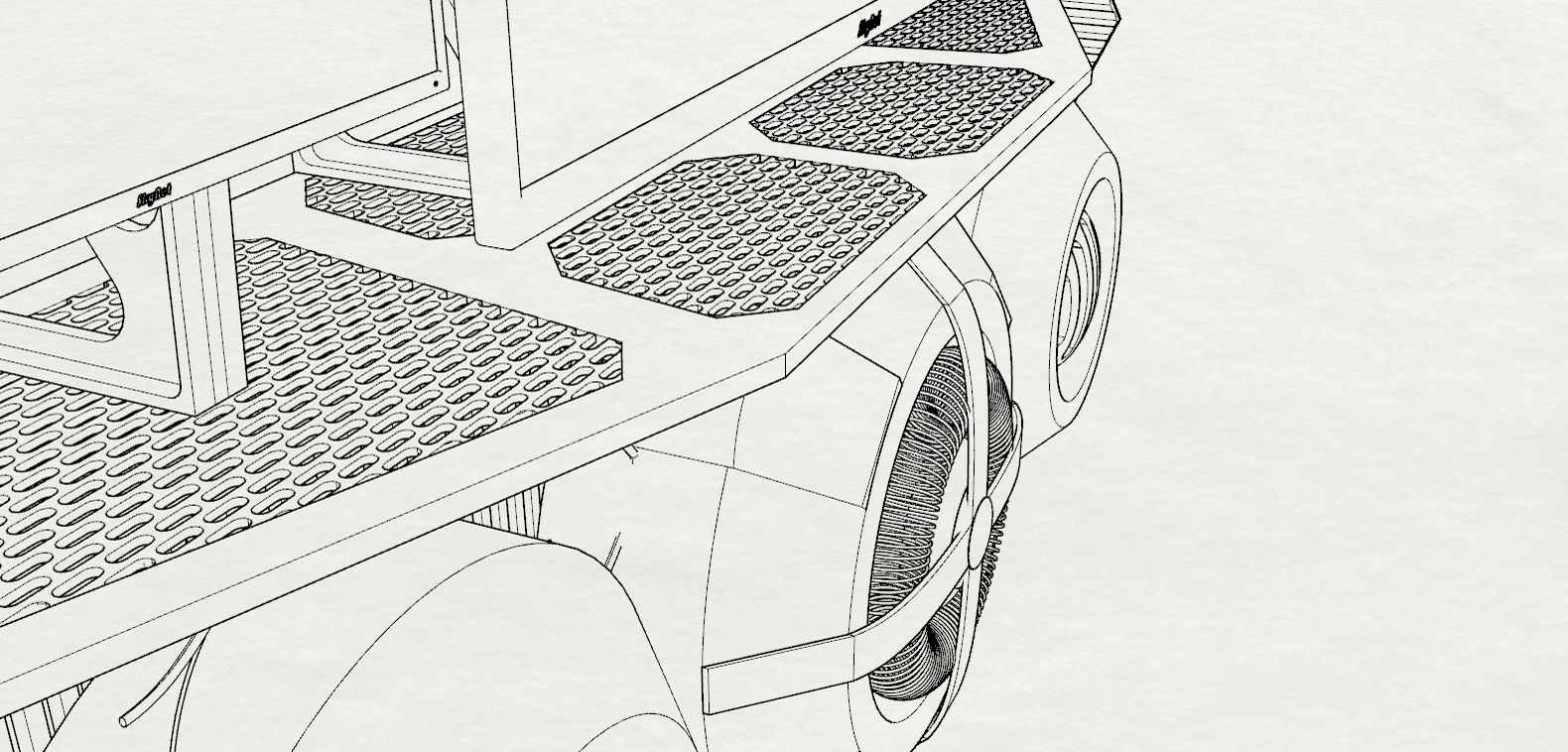
Detail D1 — the hex table, 100% fabricated
The command table looks salvaged. It isn’t — every part was made. Mostly painted MDF; the glowing domes, top and portholes, are vacuum-formed acrylic; the “copper” heat-sink columns are stacked laser-cut plates, dry-brushed to read as metal. The show’s mark is etched into the edge-lit acrylic top.
Cross-reference: keynote A, section 2.0 — the same table, seen at the center of the set.
Credits
A-209 · 4.0Most sets are a team. This one was one set of hands. The design, the model, the CNC part files, the laser and vacuum-form work, the Nerf kitbash, the surplus sourcing, the greeking, the finish, the install — all mine, in three and a half weeks. What this sheet proves is simple: the whole pipeline can run through one person, on schedule and under budget.
Most of the dressing — lab glass, electronics, wiring, server racks — came from the Texas State Surplus facility in Austin, through a contact who’d call when good stuff hit the floor.
- Stephen FaySenior art director, Rooster TeethDesign, model, fabrication, paint, dressing, install. The whole set.
- Rooster TeethClientThe Death Battle podcast. Staff project, built in the Stage 2 shop at Austin Studios.
- Texas State SurplusAustin — dressingLab equipment, electronics, wiring, server racks — the dressing layer.
- Cast + producers—Set up in the building next door; we connected several times a day. No surprises, by design.
Three and a half weeks, one set of hands, under budget — and after handoff it never came back to me for a repair. For a set the hosts rolled in and out themselves for years, that quiet is the proof.